You send TZS 10,000 and seconds later it arrives. The five stops in between: your phone and PIN, the network, the checks, the ledger and the SMS, plus what money systems teach developers.
↓ Download all 8 slides (ZIP)↓ Download article (TXT)All slide images and the full article in one ZIP, ready to save and read offline.
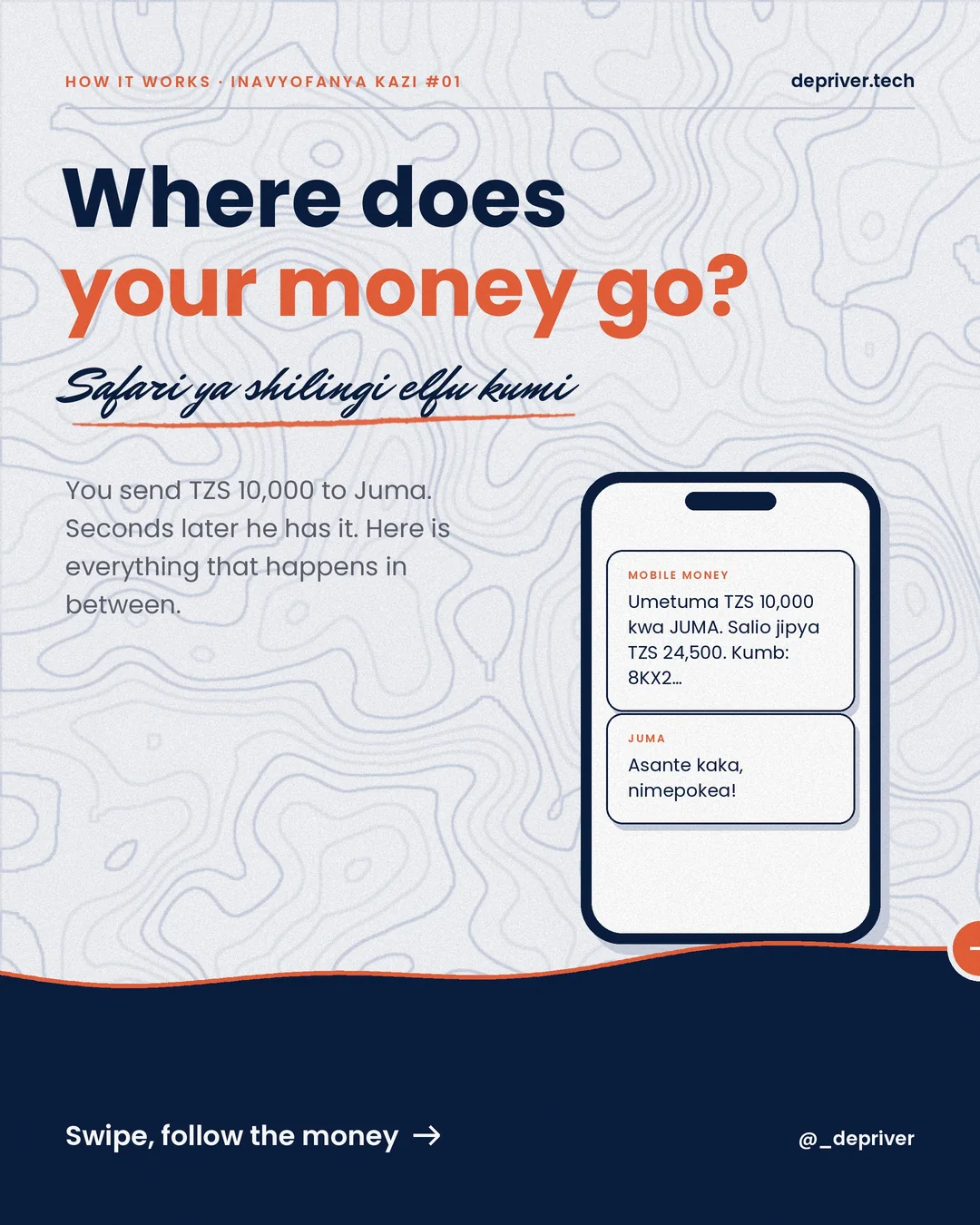
You send TZS 10,000 to Juma. Seconds later he has it. Here’s everything that happens in between, in five stops. This is Inavyofanya kazi, a series about how everyday tech works. Safari ya shilingi elfu kumi.
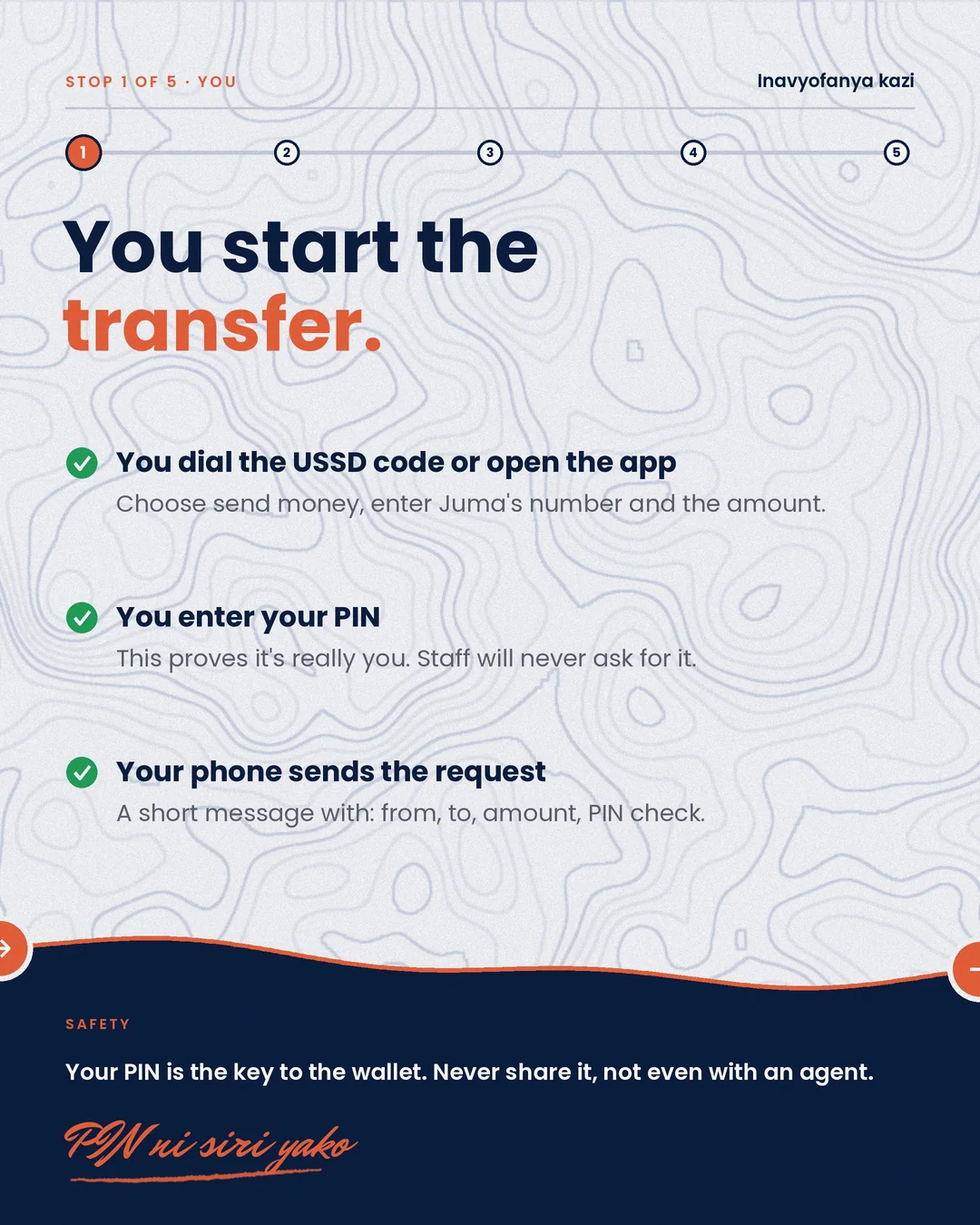
Stop 1: you
You dial the USSD code or open the app, choose “send money”, enter Juma’s number and the amount, then your PIN. Your PIN proves it’s really you. Staff and agents will never ask for it. Your phone sends the request: from, to, amount, and the PIN check.
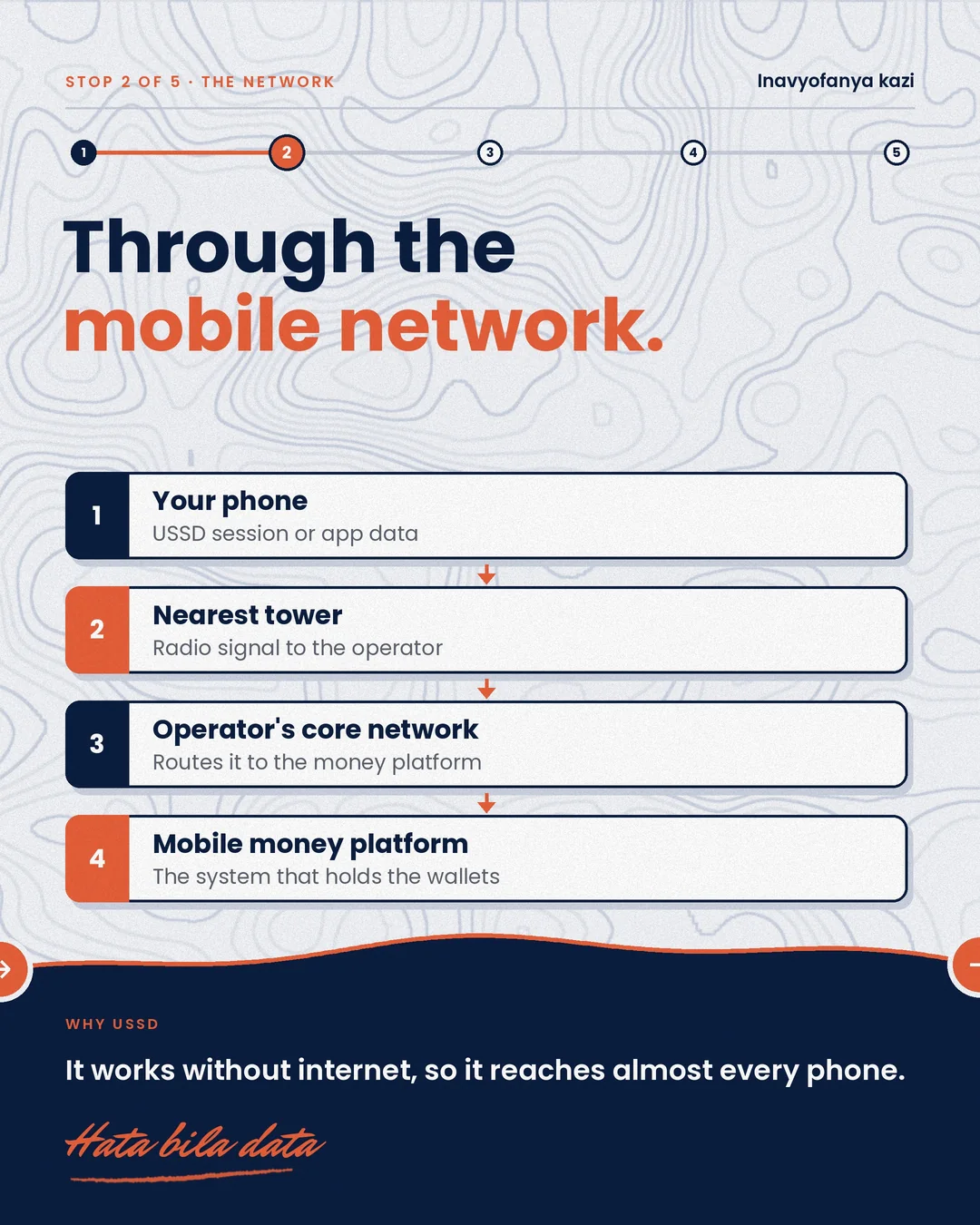
Stop 2: the network
Your phone talks to the nearest tower, which sends the request through the operator’s core network to the mobile money platform, the system that holds everyone’s wallets. Because USSD works without internet, this reaches almost every phone.
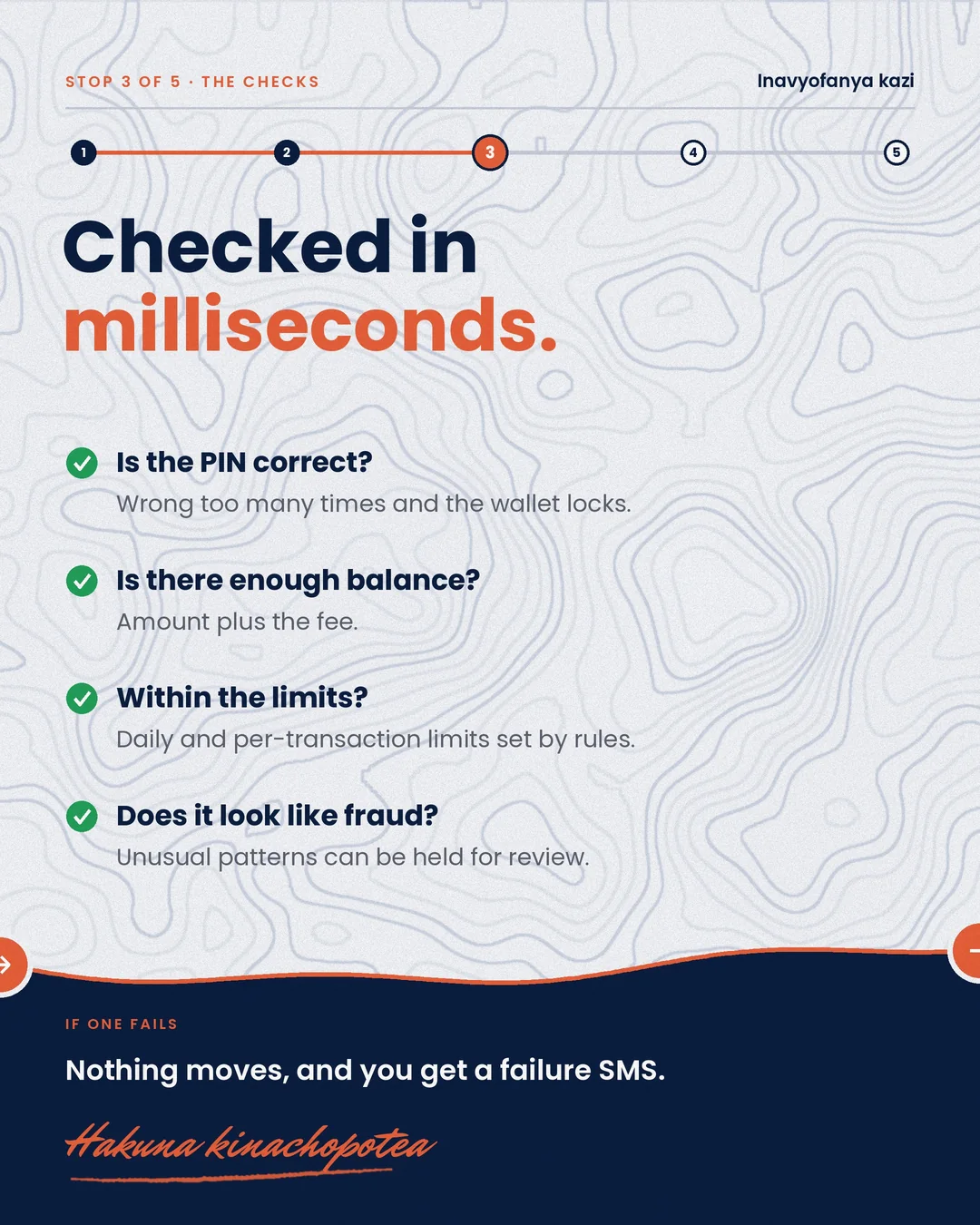
Stop 3: the checks
In milliseconds the platform checks: is the PIN correct? Is there enough balance for the amount plus the fee? Is it within the daily and per-transaction limits? Does it look like fraud? If any check fails, nothing moves and you get a failure SMS.
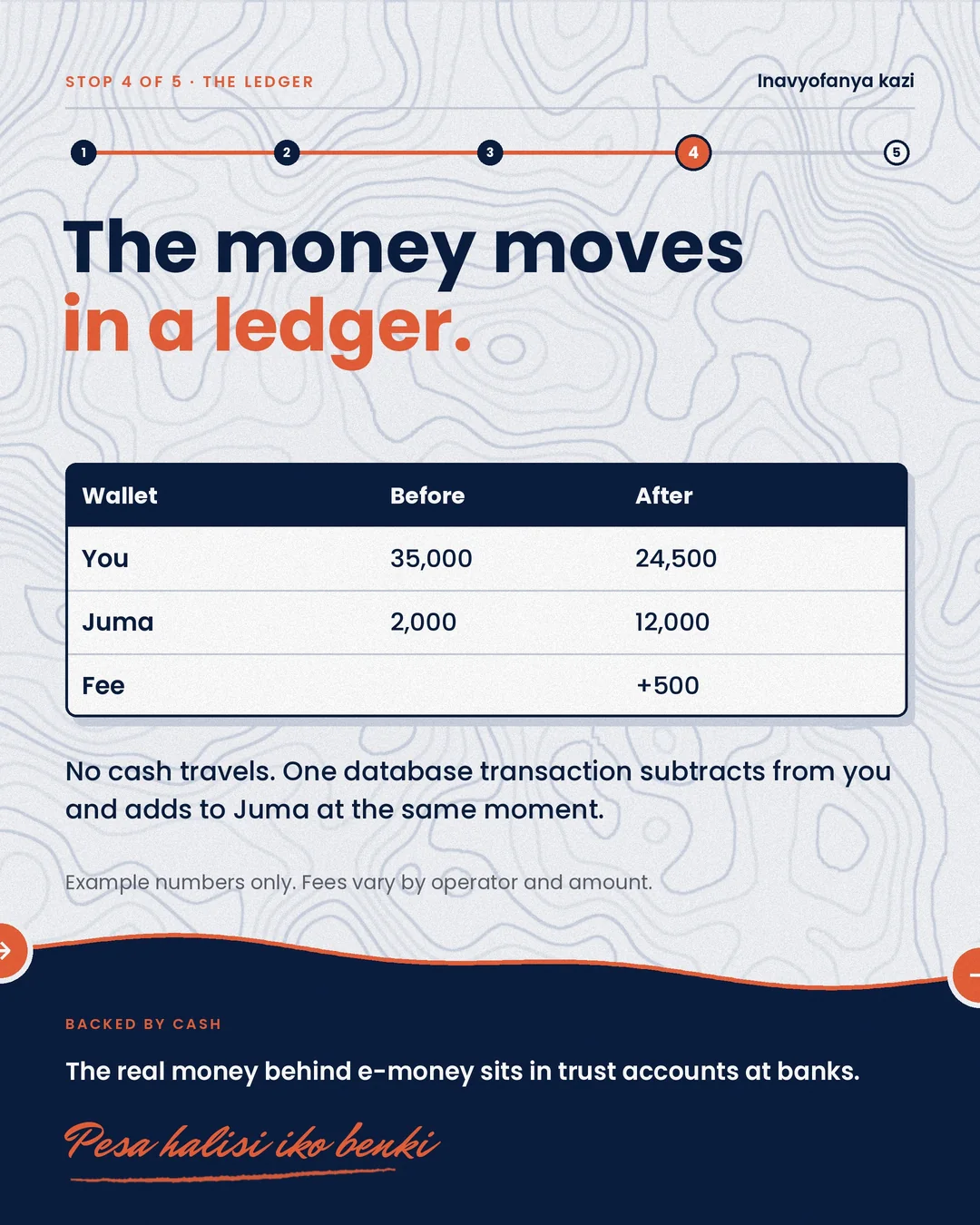
Stop 4: the ledger
| Wallet |
Before |
After |
| You |
35,000 |
24,500 |
| Juma |
2,000 |
12,000 |
| Fee |
|
+500 |
Example numbers only; fees vary by operator and amount.
No cash travels. One database transaction subtracts from you and adds to Juma at the same moment. The real money behind e-money is kept in trust accounts at banks.
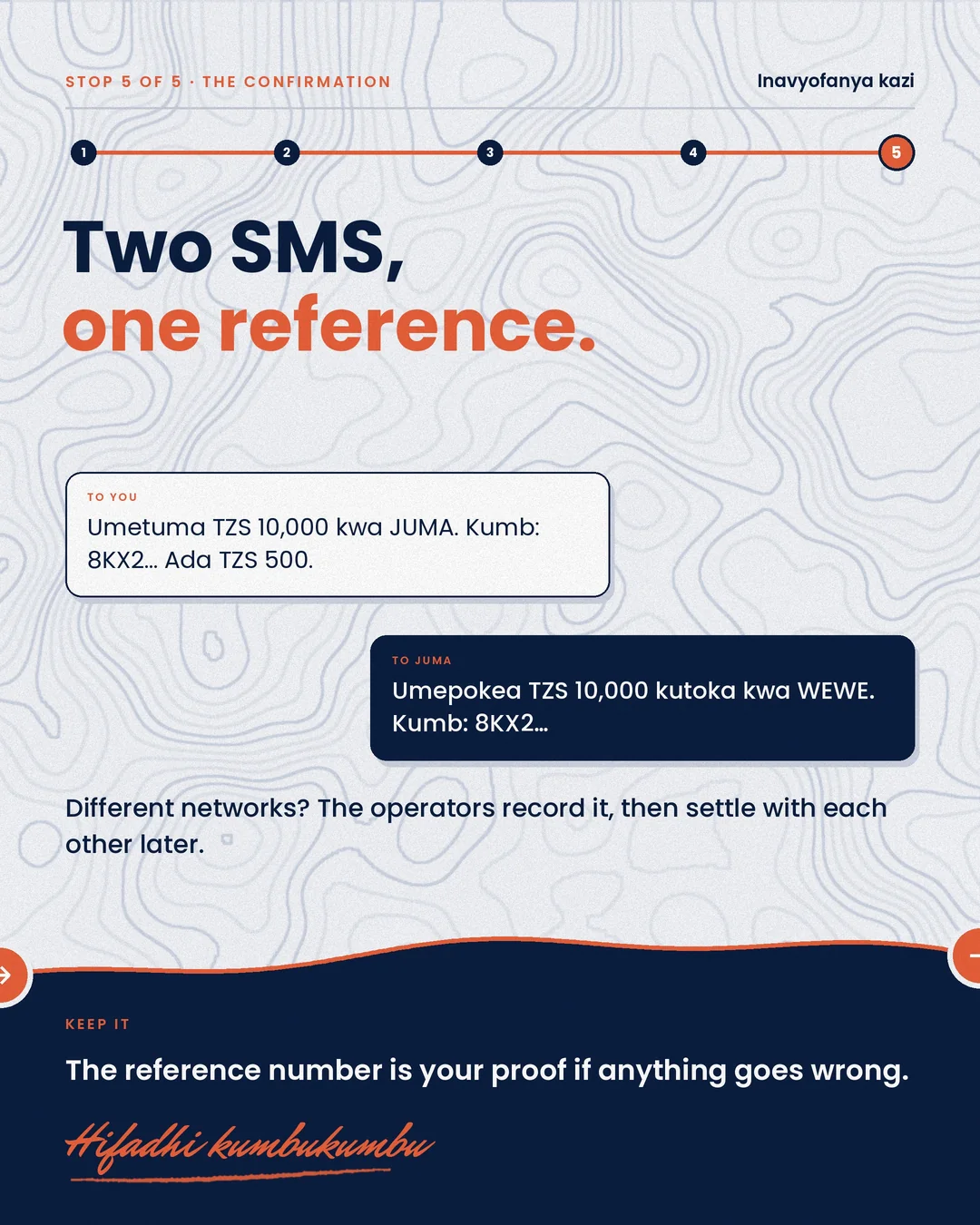
Stop 5: the confirmation
Both of you get an SMS with the same reference number. Keep it: it’s your proof if anything goes wrong. If you’re on different networks, the operators record the transfer and settle with each other later.
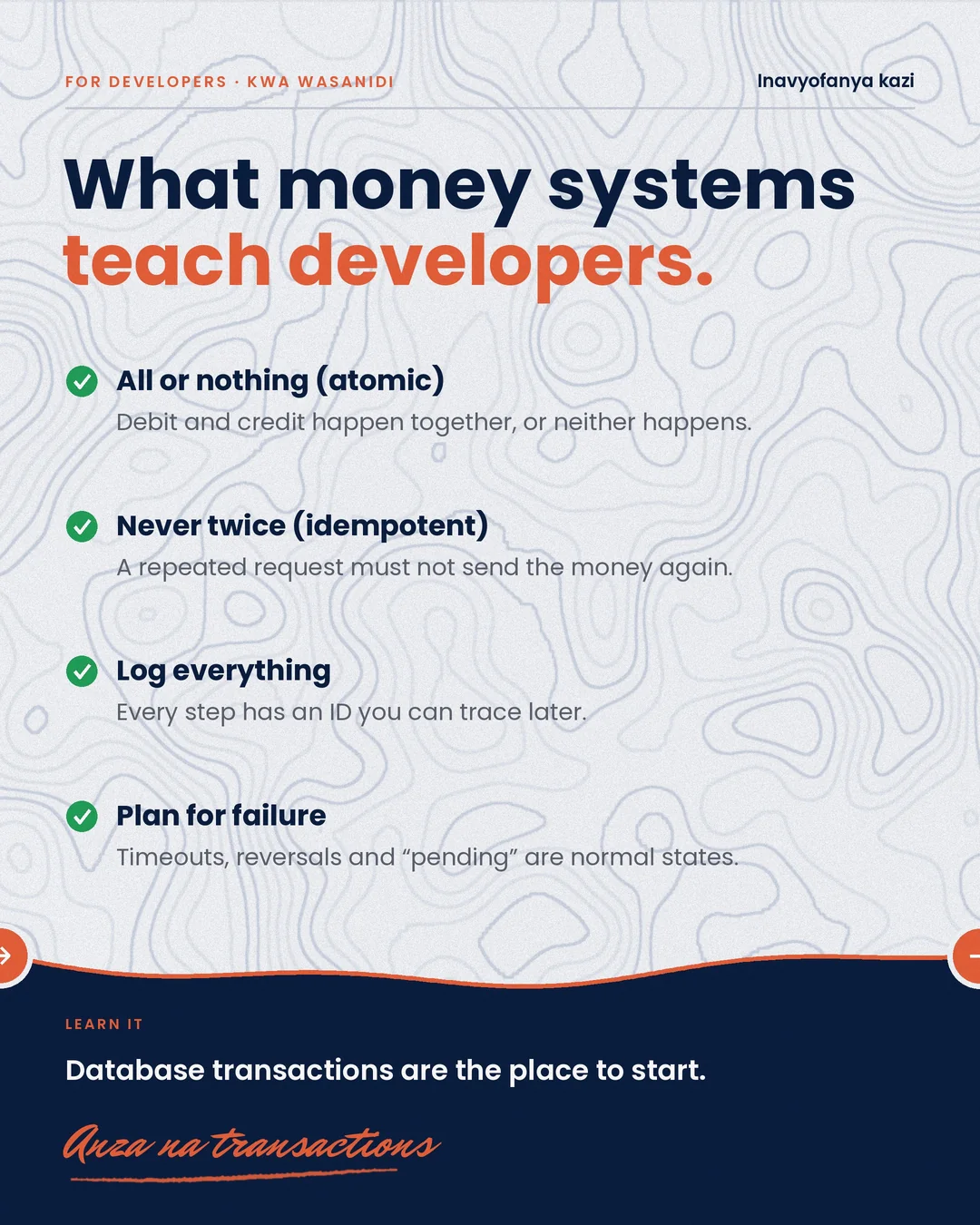
What developers can learn
- All or nothing (atomic): the debit and credit happen together, or neither happens.
- Never twice (idempotent): a repeated request must not send the money again.
- Log everything: every step has an ID you can trace.
- Plan for failure: timeouts, reversals and “pending” are normal states.
Database transactions are the place to start.
What should I explain next? Comment the tech you want explained.
 8 slides
 8 slides
 6 slides