Field practical training can end with a reference, real experience and even a job offer. A week-by-week guide for tech students in Tanzania: logbook, real work, tools, people, proof and the recommendation letter.
↓ Download all 10 slides (ZIP)↓ Download article (TXT)All slide images and the full article in one ZIP, ready to save and read offline.
My first field practical training was at MUST in 2024, and it shaped how I work today. FPT can feel like a few weeks of sitting in an office waiting for someone to notice you. Treat it like a holiday and it ends with a signed logbook and nothing else. Treat it like your first job and it can end with a reference, real experience and even a job offer. Mafunzo si likizo.
Here are eight moves, one for each week.
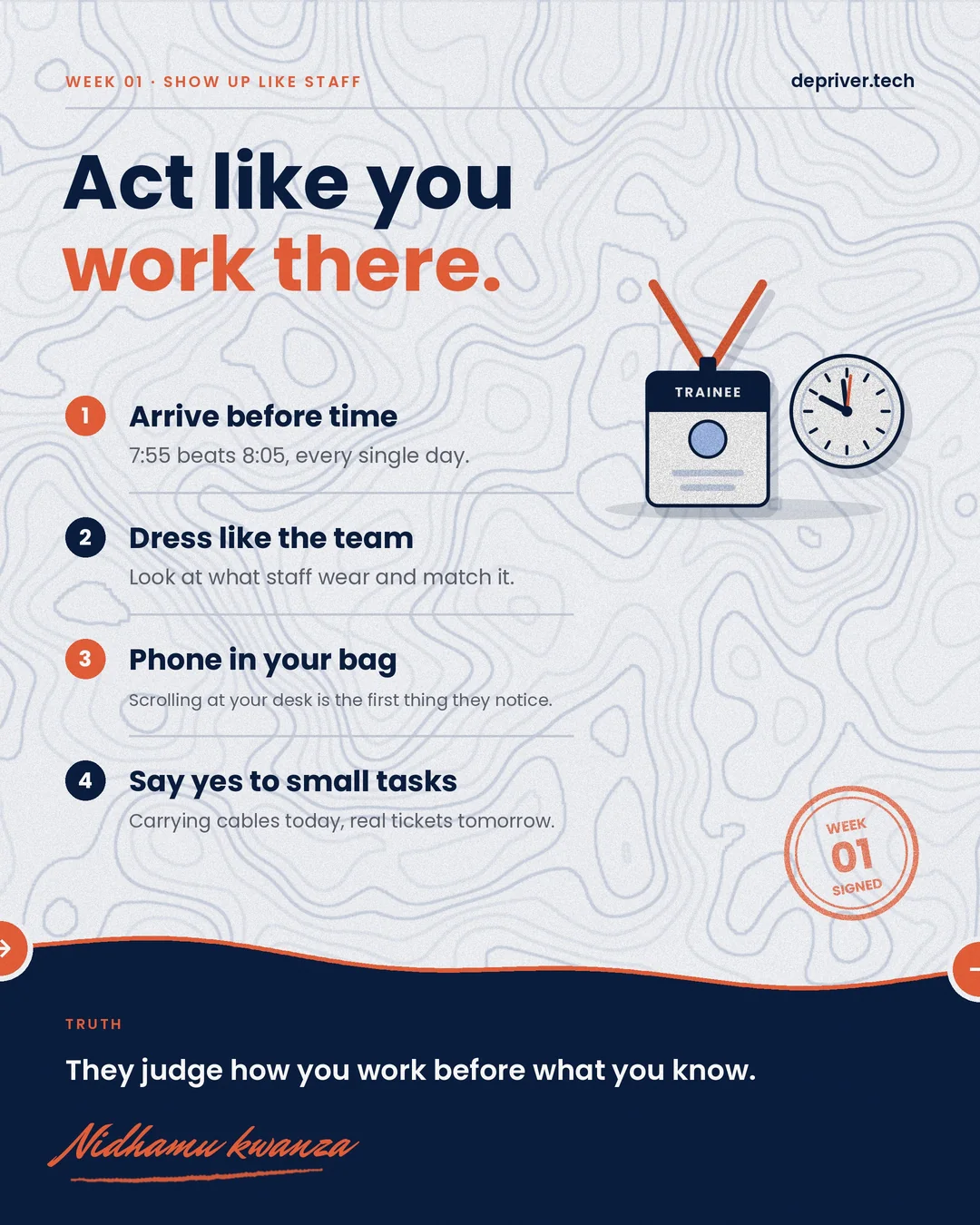
Week 1: Act like you work there
- Arrive before time. 7:55 beats 8:05, every single day.
- Dress like the team. Look at what staff wear and match it.
- Keep your phone in your bag. Scrolling at your desk is the first thing they notice.
- Say yes to small tasks. Carrying cables today leads to real tickets tomorrow.
They judge how you work before they judge what you know. Nidhamu kwanza.
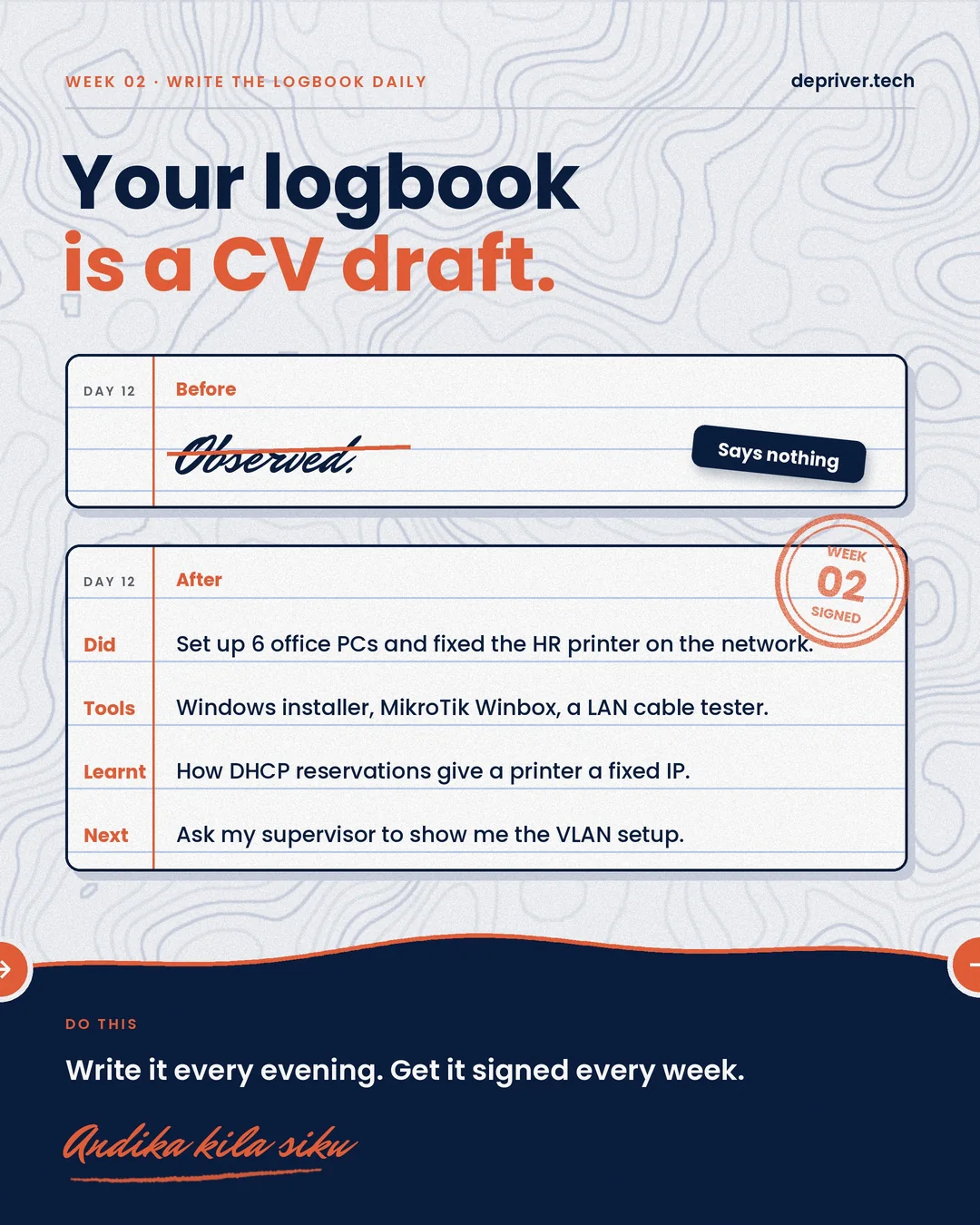
Week 2: Write the logbook daily
Your logbook is the first draft of your CV. “Observed.” says nothing. A good entry says:
- Did: set up 6 office PCs and fixed the HR printer on the network.
- Tools: Windows installer, MikroTik Winbox, a LAN cable tester.
- Learnt: how DHCP reservations give a printer a fixed IP.
- Next: ask my supervisor to show me the VLAN setup.
Write it every evening, not the night before submission, and get it signed every week. Andika kila siku.
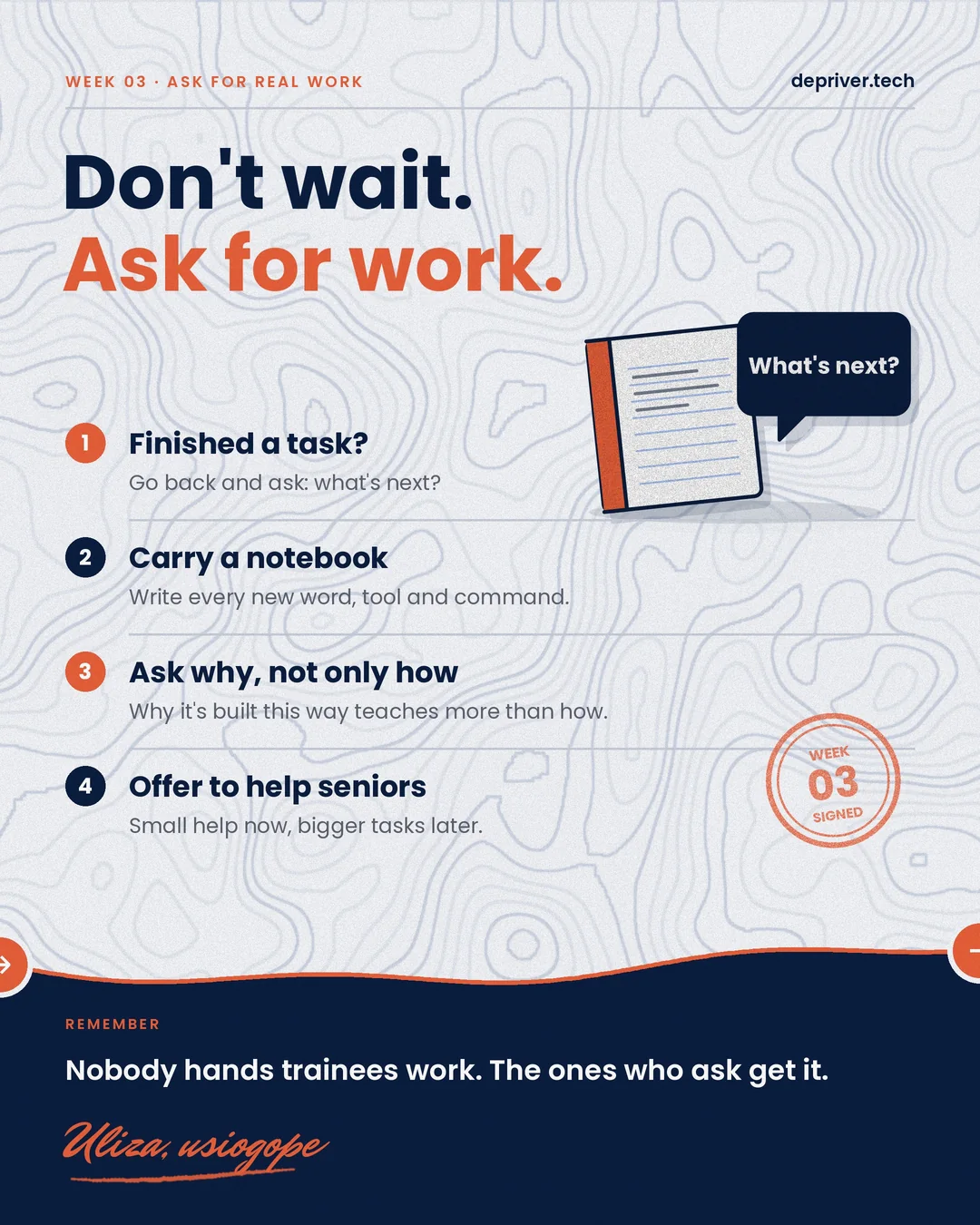
Week 3: Ask for real work
- Finished a task? Go back and ask: what’s next?
- Carry a notebook and write down every new word, tool and command.
- Ask why it’s built this way, not only how.
- Offer to help seniors with small tasks. Small help now leads to bigger tasks later.
Nobody hands trainees work. The ones who ask get it. Uliza, usiogope.
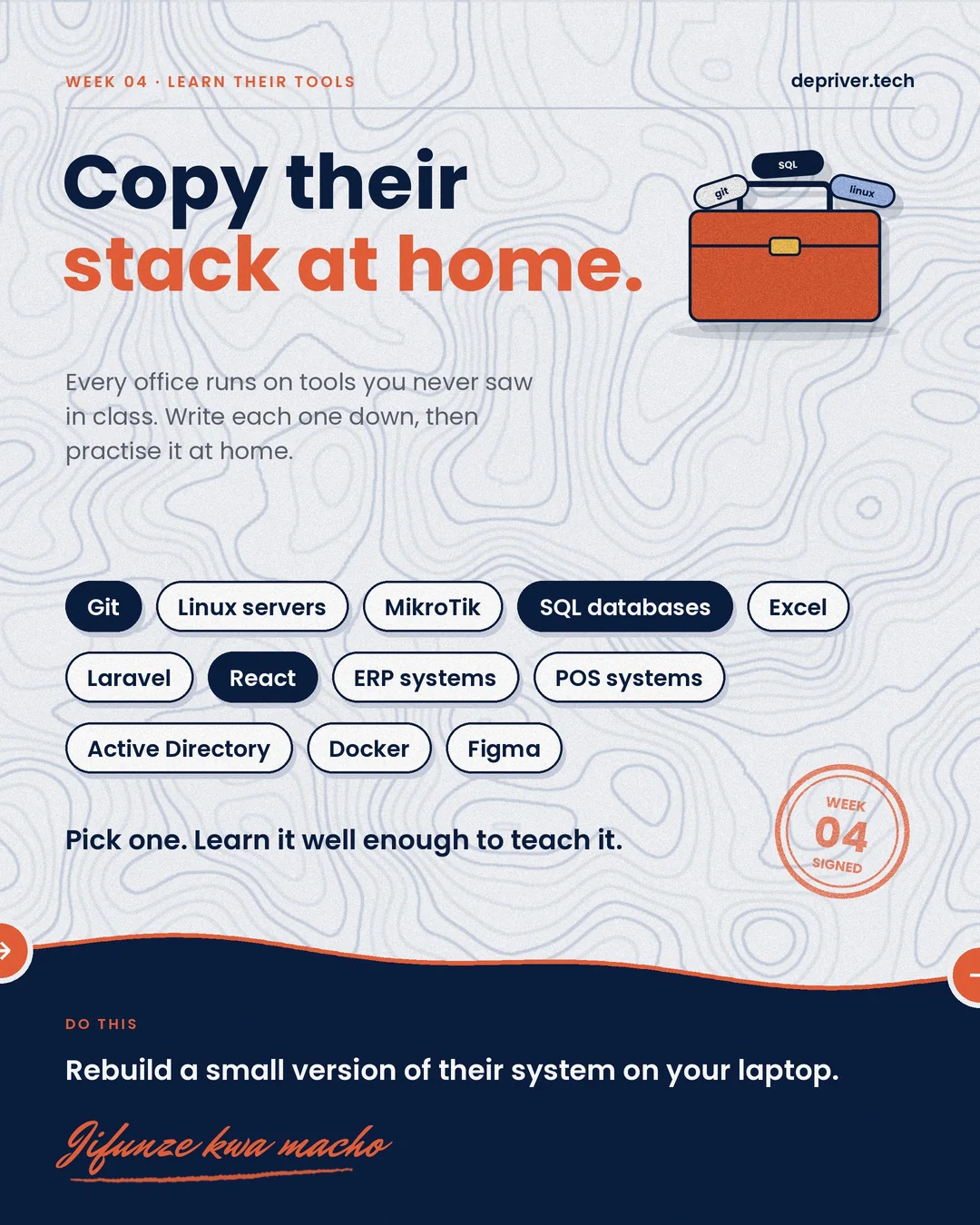
Every office runs on tools you never saw in class: Git, Linux servers, MikroTik, SQL databases, Excel, Laravel, React, ERP and POS systems, Active Directory, Docker, Figma. Write each one down, pick one, and practise it at home until you could teach it. Even better, rebuild a small version of their system on your laptop. Jifunze kwa macho.
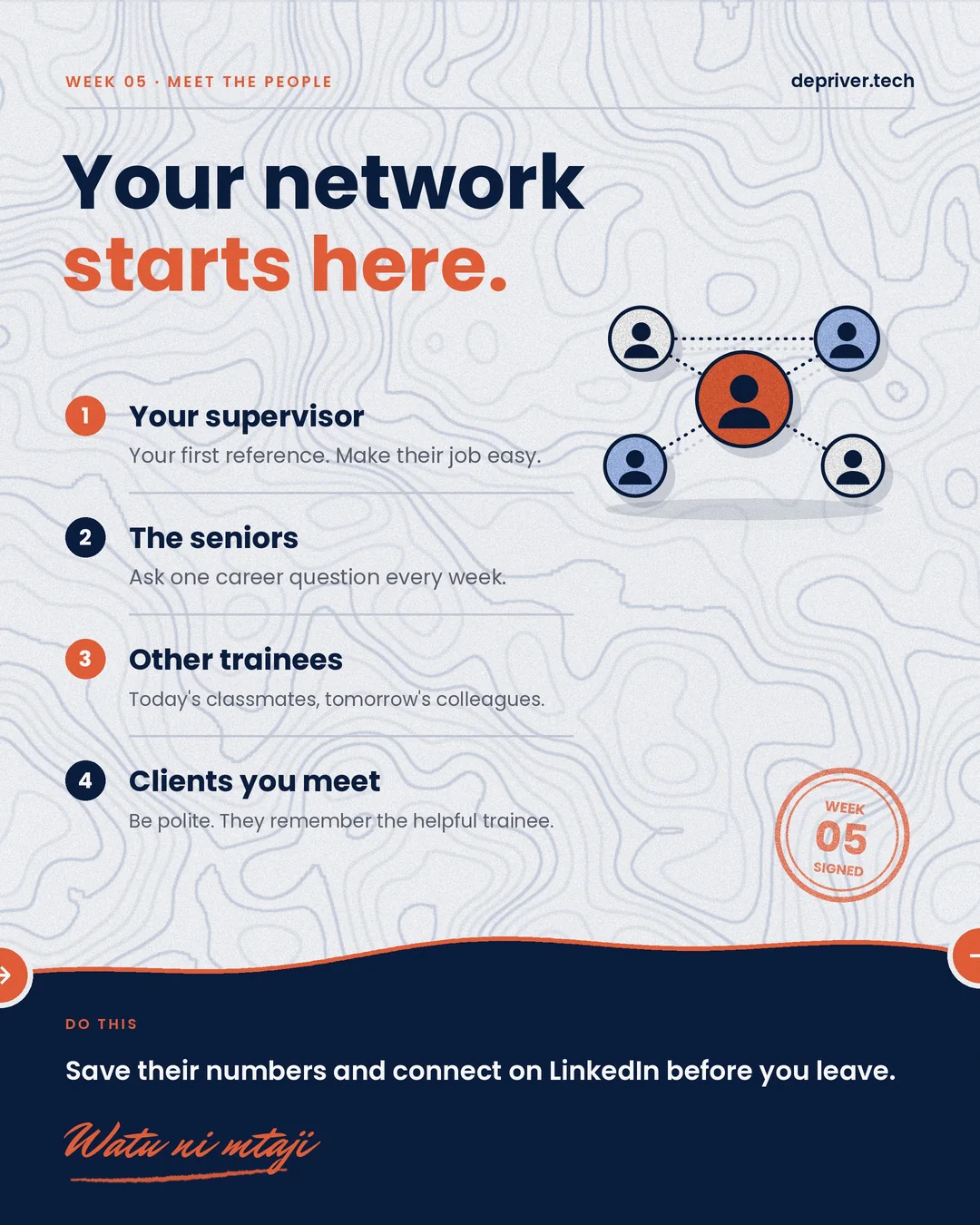
Week 5: Meet the people
- Your supervisor is your first reference. Make their job easy.
- The seniors: ask one career question every week.
- Other trainees are today’s classmates and tomorrow’s colleagues.
- Clients you meet remember the helpful trainee.
Save their numbers and connect on LinkedIn before you leave. Watu ni mtaji.
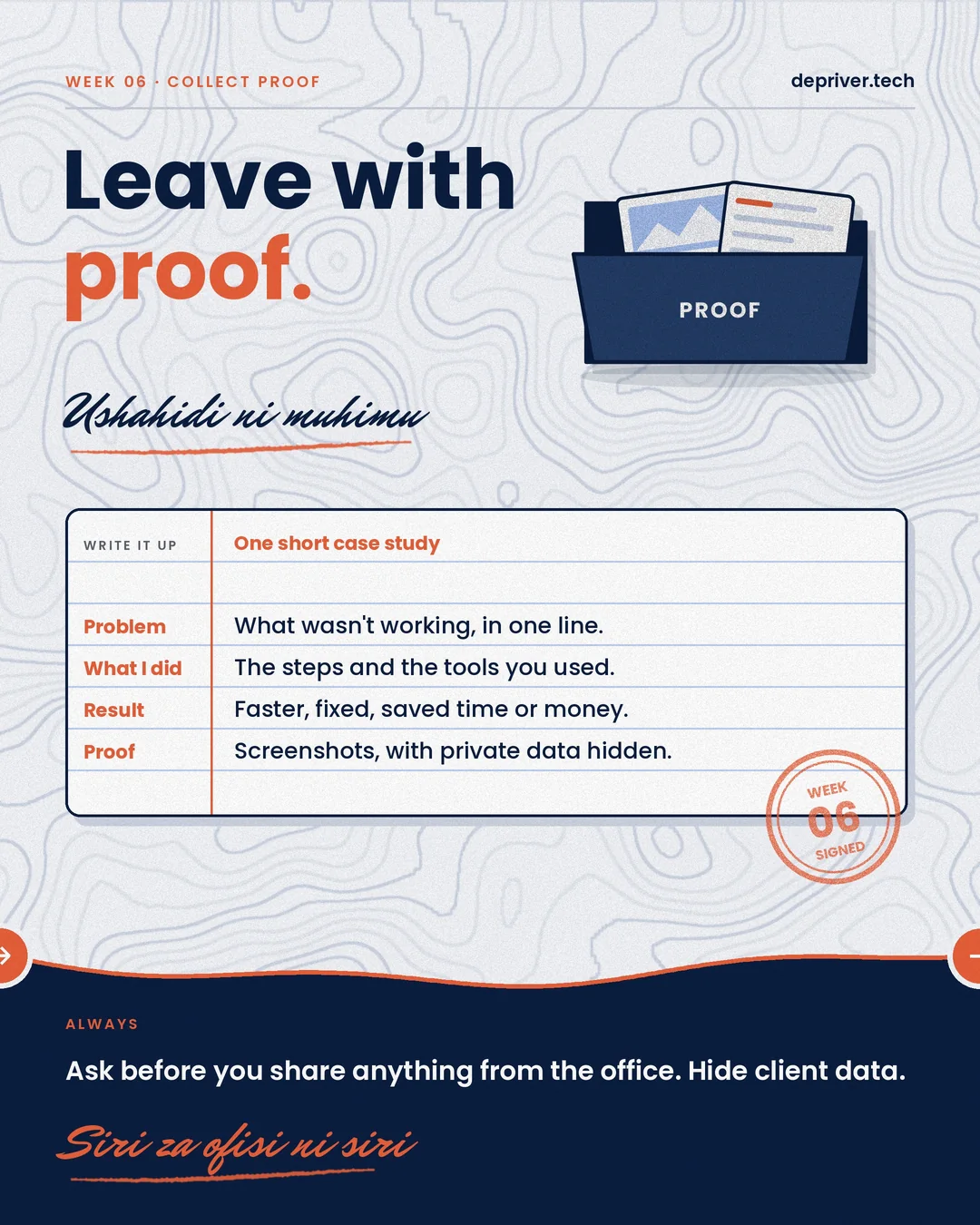
Week 6: Collect proof
Write one short case study of something you worked on:
- Problem: what wasn’t working, in one line.
- What I did: the steps and the tools you used.
- Result: faster, fixed, saved time or money.
- Proof: screenshots, with private data hidden.
Always ask before you share anything from the office, and never show client data. Siri za ofisi ni siri.
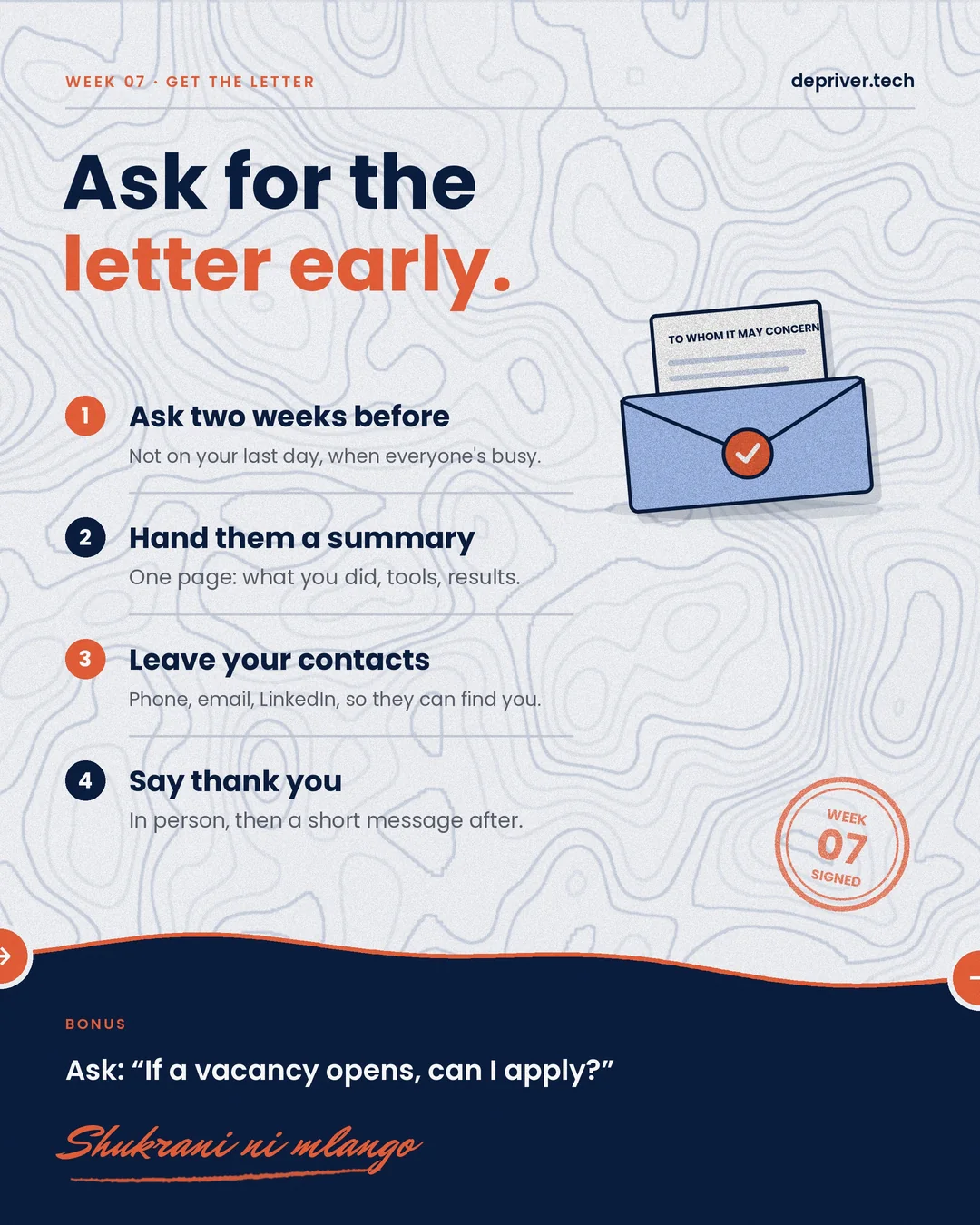
Week 7: Get the recommendation letter
- Ask two weeks before you finish, not on your last day when everyone’s busy.
- Hand your supervisor a one-page summary of what you did, the tools you used and the results.
- Leave your contacts: phone, email and LinkedIn.
- Say thank you in person, then send a short message after.
Bonus: ask, “If a vacancy opens, can I apply?” Shukrani ni mlango.
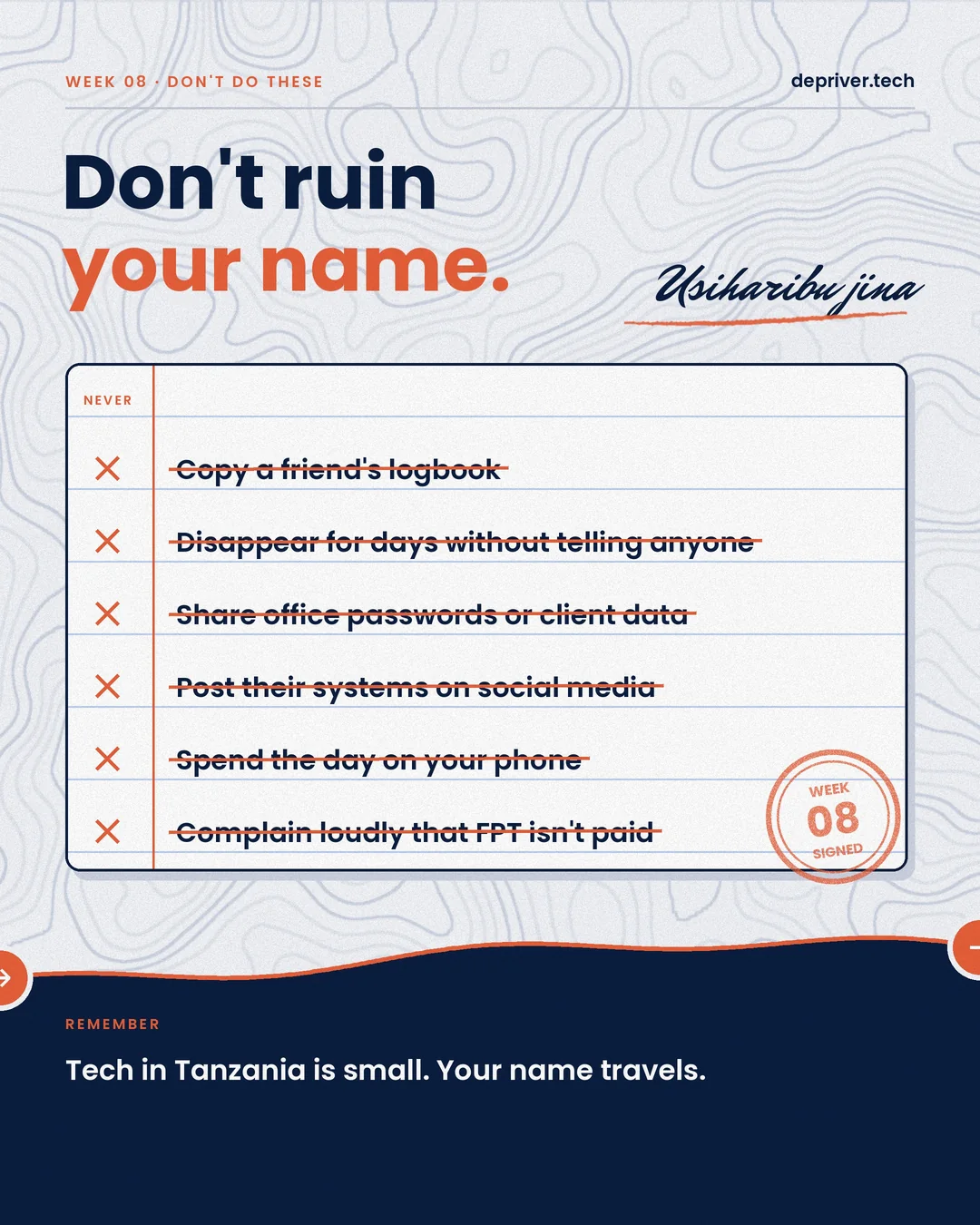
Week 8: Don’t ruin your name
- Copying a friend’s logbook
- Disappearing for days without telling anyone
- Sharing office passwords or client data
- Posting their systems on social media
- Spending the day on your phone
- Complaining loudly that FPT isn’t paid
Tech in Tanzania is small, and your name travels. Usiharibu jina.
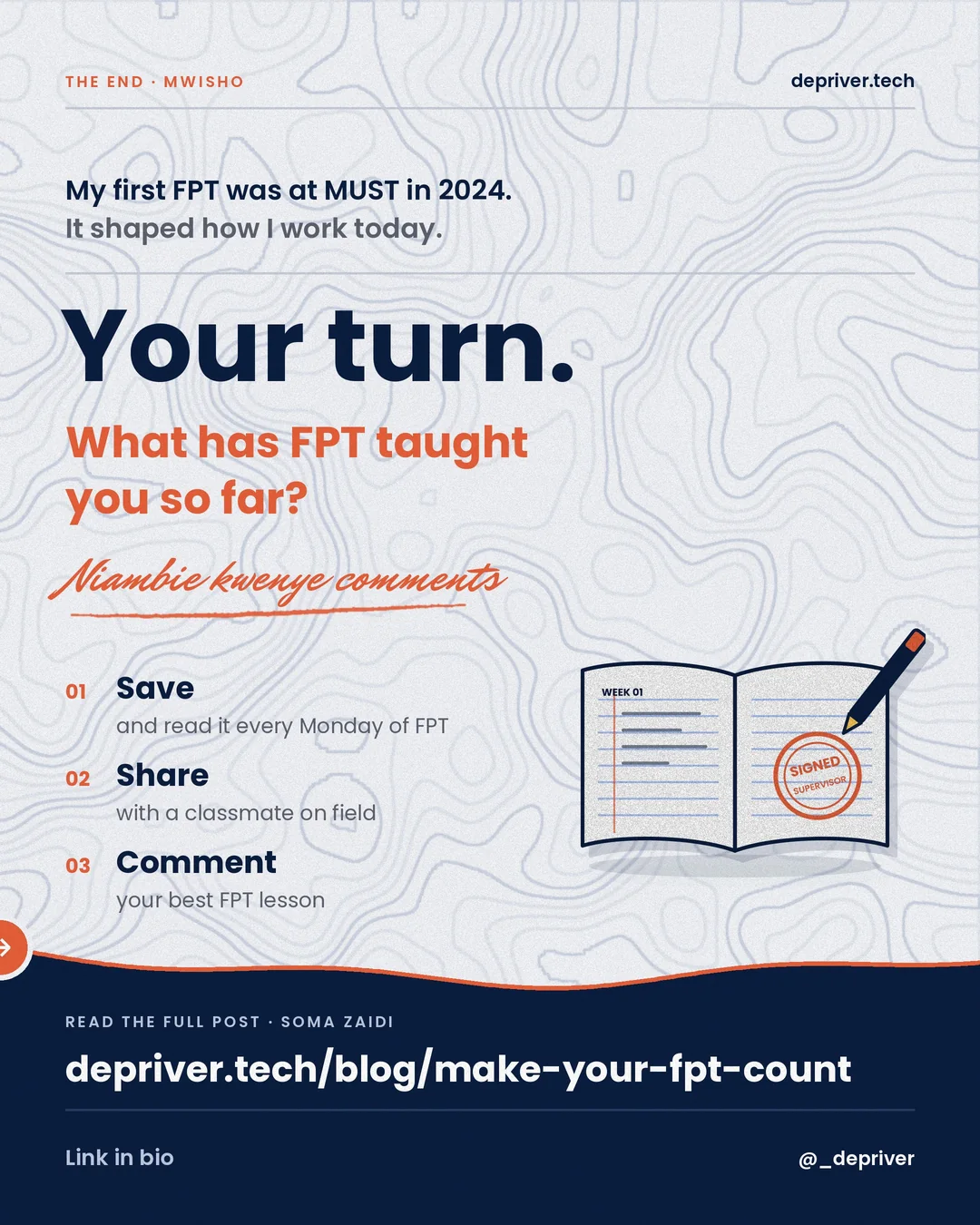
What has FPT taught you so far? Niambie kwenye comments, and share this with a classmate who’s on field right now.

 9 slides
 8 slides
 8 slides