A beginner's guide to freelancing in tech: starting with no clients, your first 30 days, then the 7 stages of a client job done professionally: niche, clients, brief, agreement, updates, scope and getting paid.
Freelancing is one of the fastest ways for a tech student or a new developer to earn and get real experience. But most beginners don’t fail because of their skills. They fail because they work without agreements, start without deposits, go silent mid-project and never get paid in full. This guide starts from zero and walks you through every stage of a job, the way professionals do it. Kazi safi, malipo safi.
Starting from zero
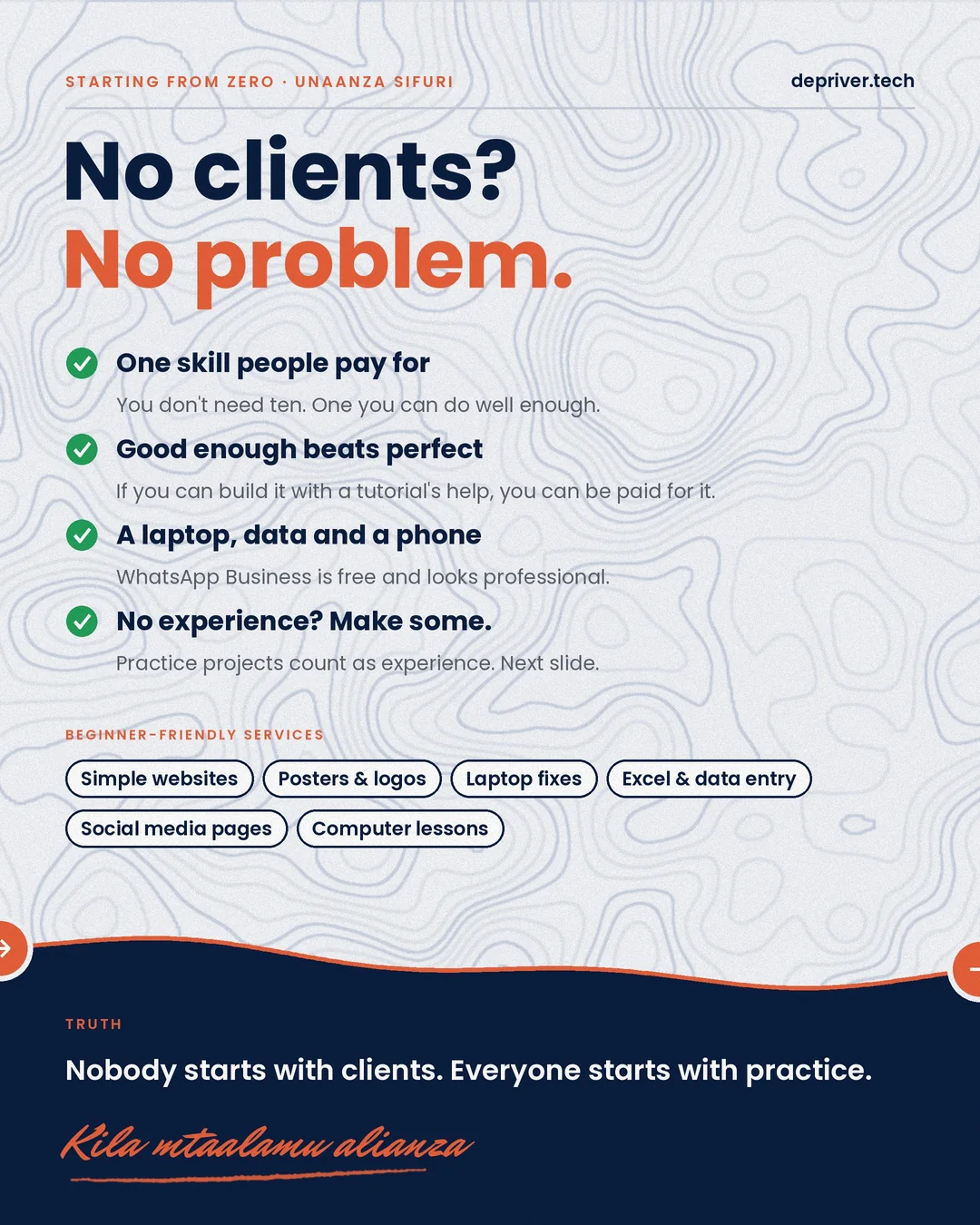
You don’t need clients, a big portfolio or years of experience to start. You need:
- One skill people pay for. Not ten. Simple websites, posters and logos, laptop fixes, Excel and data entry, social media pages or computer lessons are all real, paid services.
- Good enough, not perfect. If you can build it with a tutorial’s help, you can be paid for it. You’ll get better on the job.
- A laptop, data and a phone. WhatsApp Business is free and makes you look professional: a business name, a catalogue, quick replies and labels for clients.
- Experience you make yourself. Practice projects count. Nobody starts with clients; everyone starts with practice. Kila mtaalamu alianza.
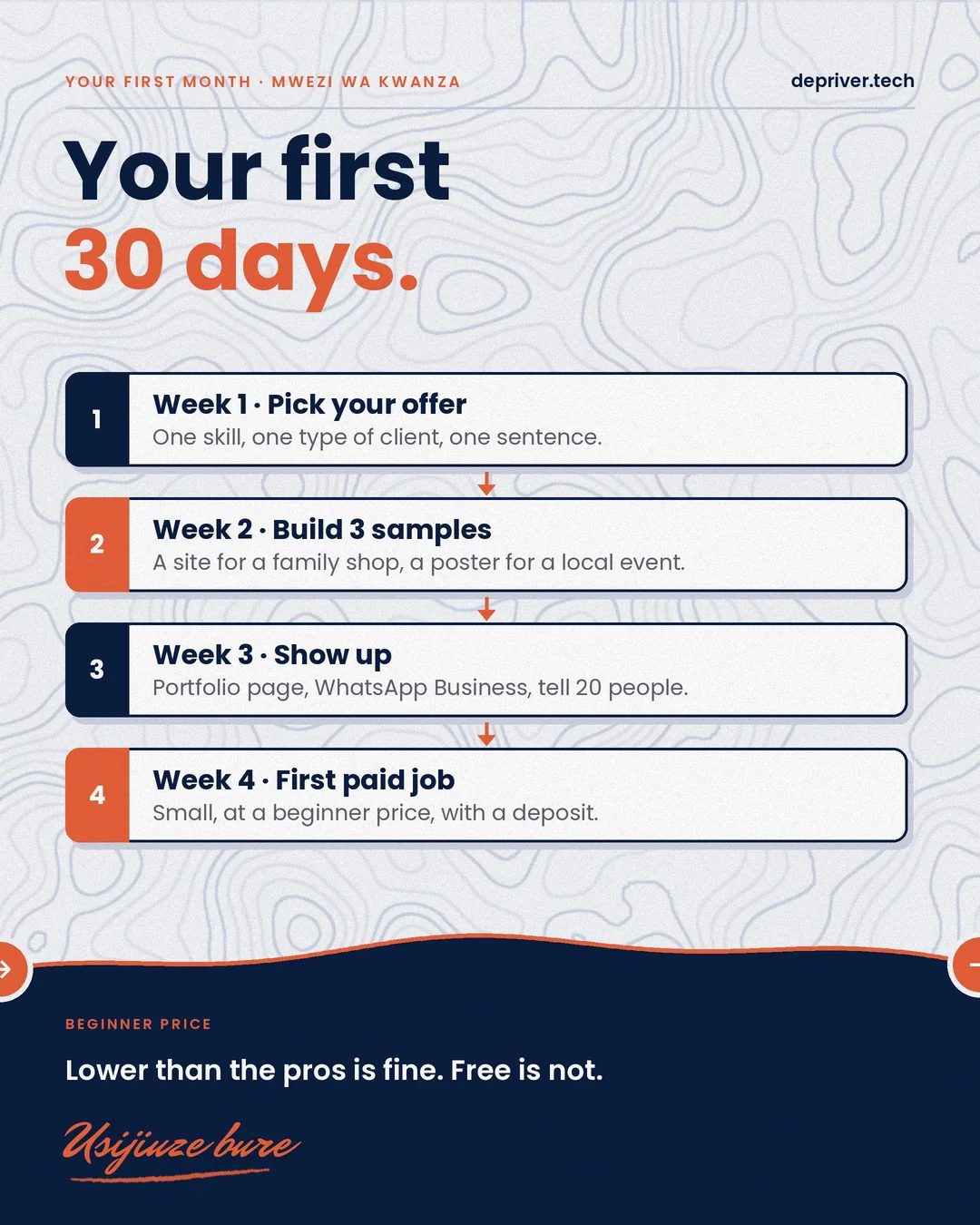
Your first 30 days
- Week 1, pick your offer. One skill, one type of client, one sentence: “I make simple websites for small shops.”
- Week 2, build 3 samples. A website for a family member’s shop, a poster for a local event, a redesign of a business page you like. These become your portfolio.
- Week 3, show up. Make a simple portfolio page, set up WhatsApp Business, and tell 20 people what you do. Post your samples on your status and LinkedIn.
- Week 4, your first paid job. Small, at a beginner price, and still with a deposit and a short written agreement.
A beginner price lower than the pros is fine. Free is not. (For how to work out a price, see Price your first freelance job.) Usijiuze bure.
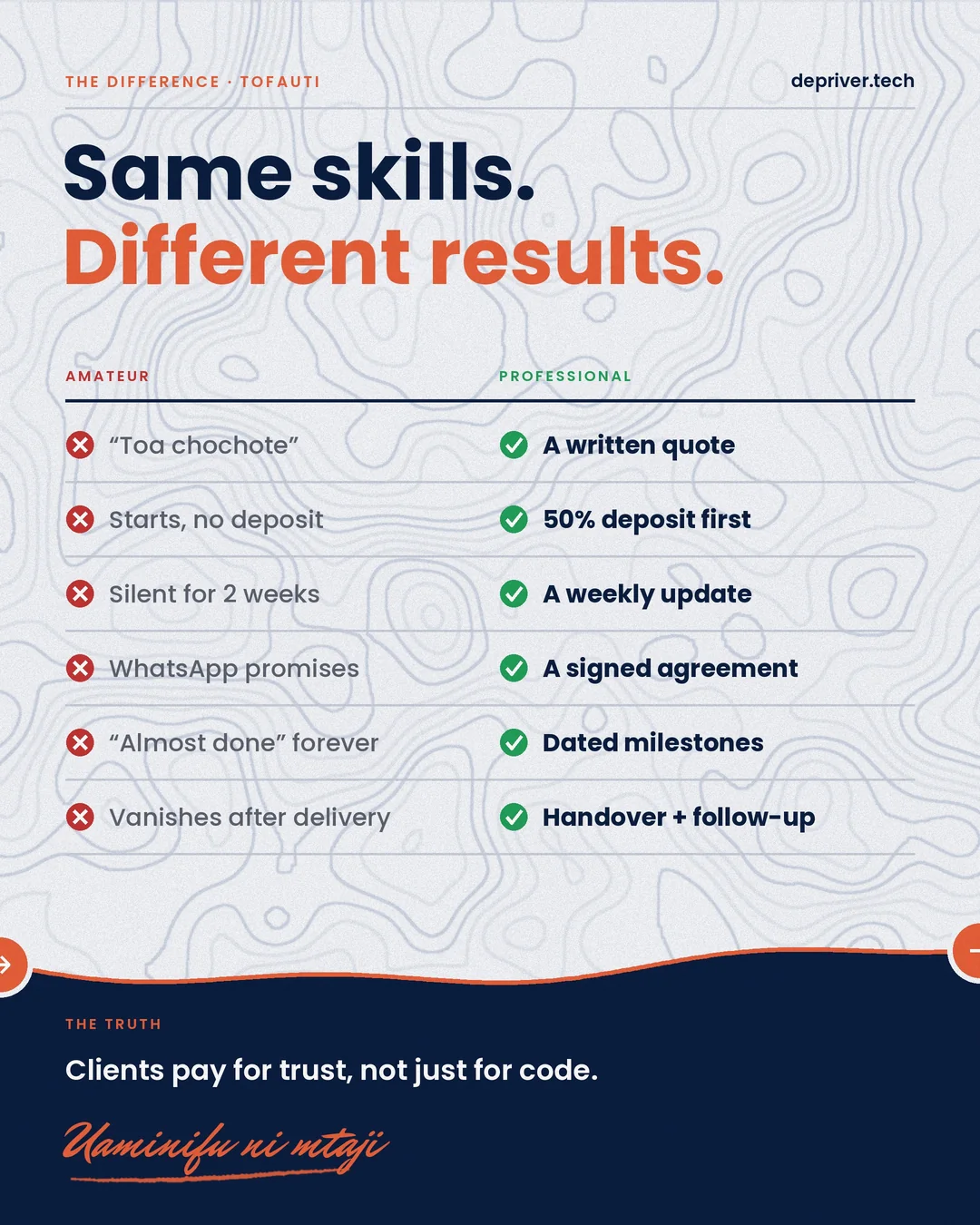
Amateur vs professional
Two freelancers can have exactly the same skills and get completely different results:
| Amateur |
Professional |
| “Toa chochote” |
A written quote |
| Starts with no deposit |
50% deposit first |
| Silent for two weeks |
A weekly update |
| WhatsApp promises |
A signed agreement |
| “Almost done” forever |
Dated milestones |
| Vanishes after delivery |
Handover and a follow-up |
Clients pay for trust, not just for code. Uaminifu ni mtaji.
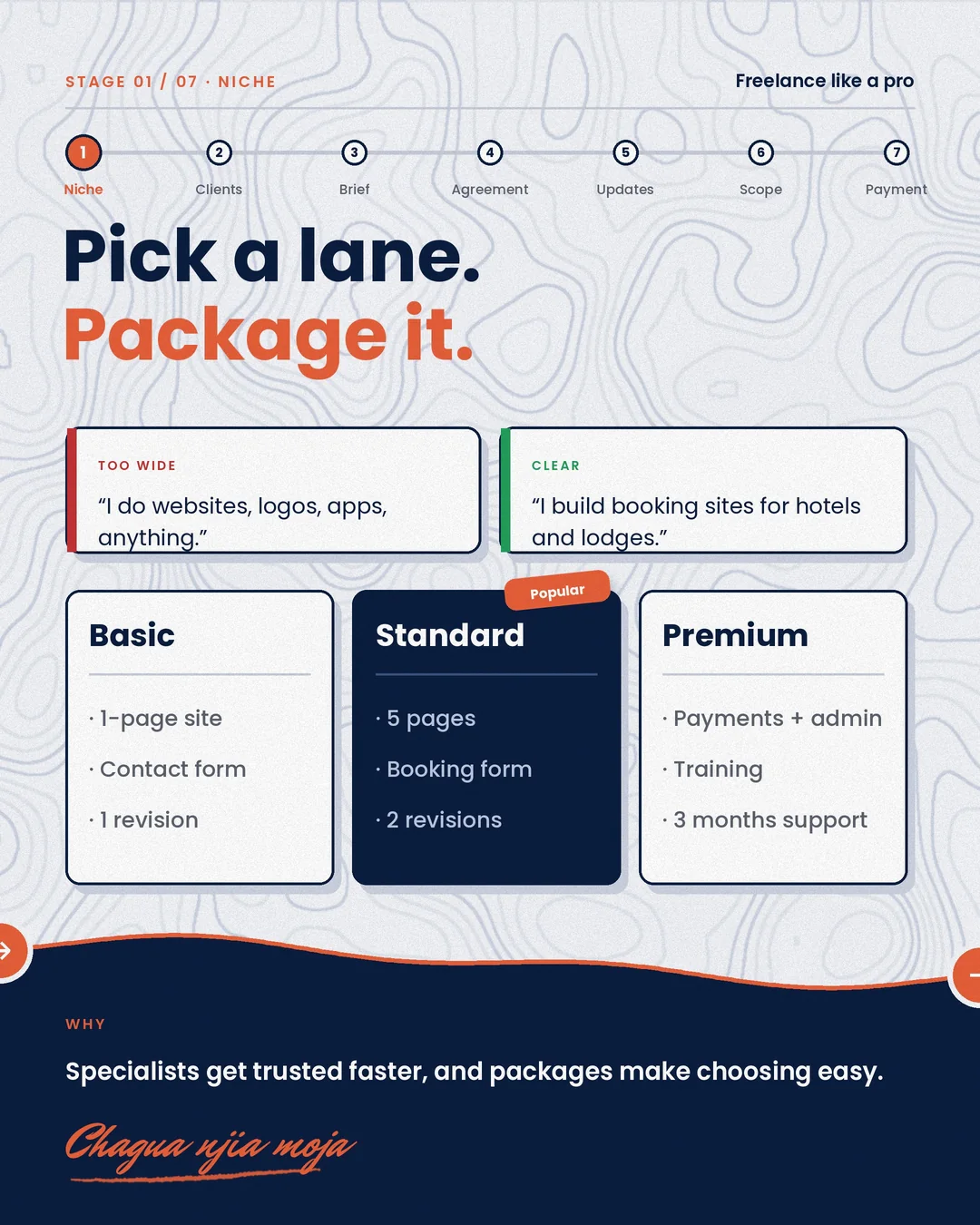
Stage 01: Niche, pick a lane and package it
“I do websites, logos, apps, anything” sounds like you’re not great at any of them. “I build booking sites for hotels and lodges” sounds like an expert, even if you’re new. Specialists get trusted faster.
Then turn your service into packages, so clients choose instead of negotiating from zero:
- Basic: a one-page site, a contact form, one revision.
- Standard: five pages, a booking form, two revisions.
- Premium: payments and an admin panel, training, three months of support.
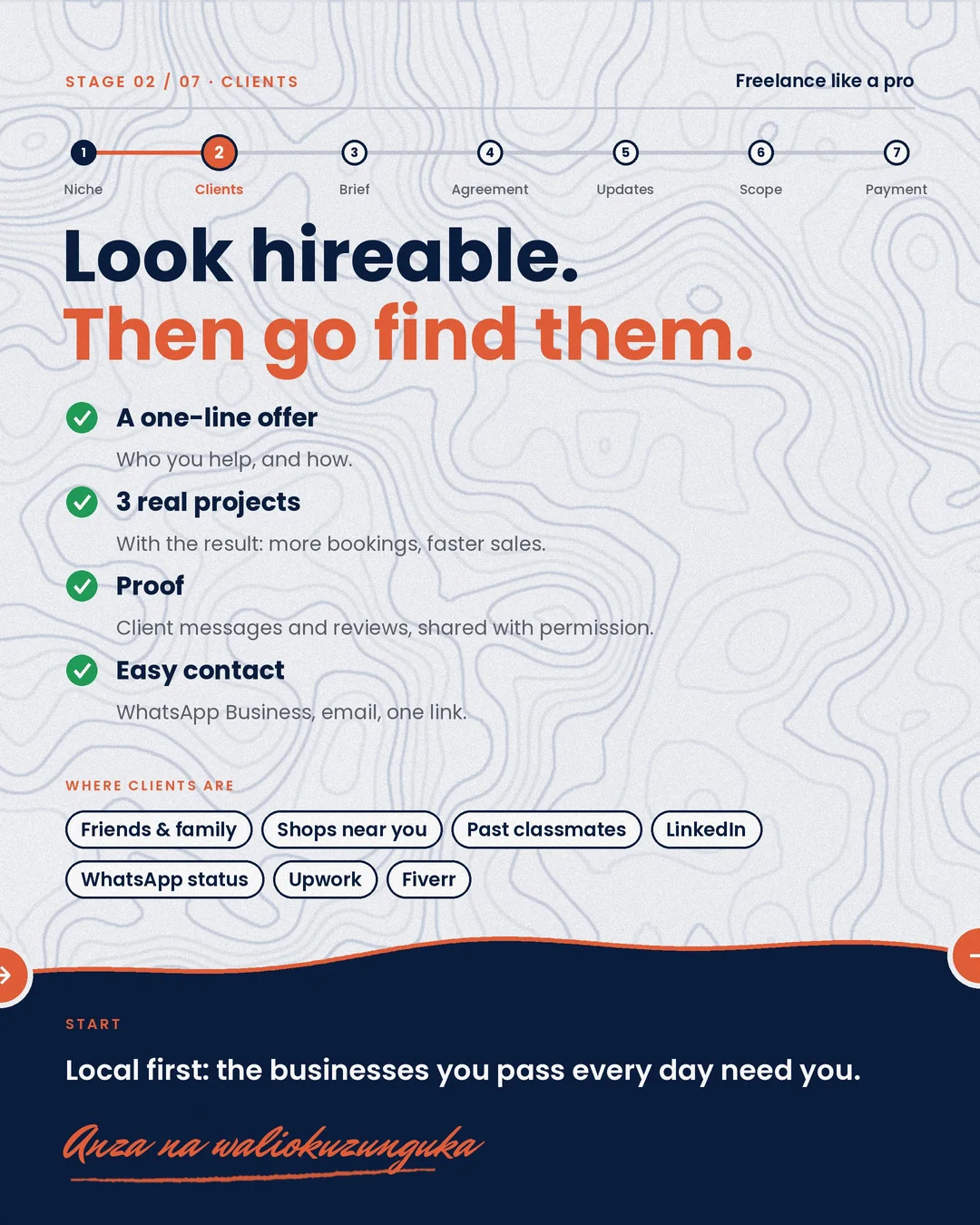
Stage 02: Clients, look hireable, then go find them
Before you reach out, make sure anyone who checks you out sees:
- A one-line offer: who you help and how.
- Three real projects, with the result where you can: more bookings, faster sales, fewer phone calls.
- Proof: messages and reviews from happy clients, shared with their permission.
- Easy contact: WhatsApp Business, email and one link to your work.
Where are the clients? Start local: friends and family, the shops you pass every day, past classmates. Then LinkedIn, your WhatsApp status, and platforms like Upwork and Fiverr once you have samples and reviews. Anza na waliokuzunguka.
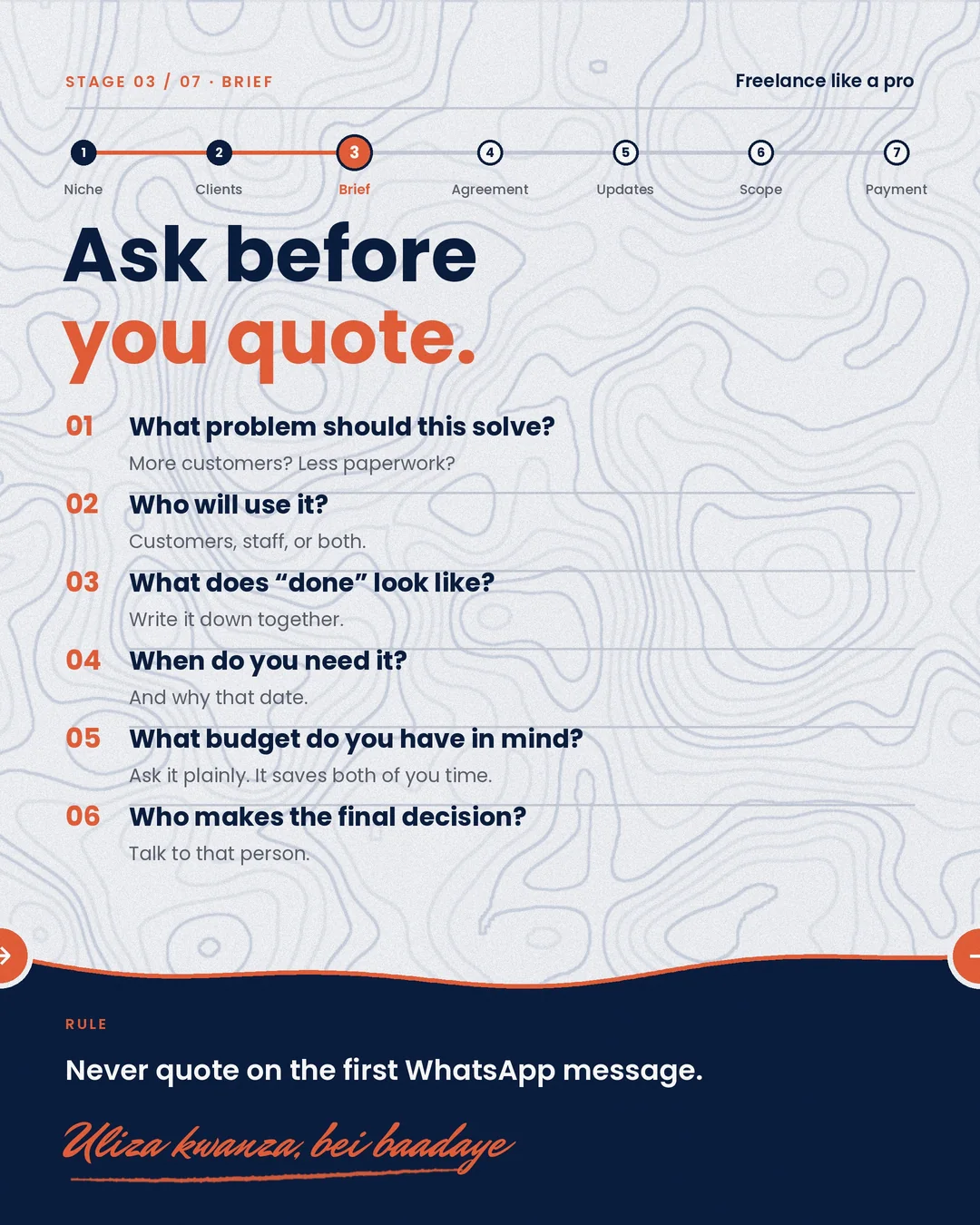
Stage 03: Brief, ask before you quote
Never quote on the first WhatsApp message. Ask:
- What problem should this solve? More customers? Less paperwork?
- Who will use it? Customers, staff, or both?
- What does “done” look like? Write it down together.
- When do you need it, and why that date?
- What budget do you have in mind? Ask plainly; it saves both of you time.
- Who makes the final decision? Talk to that person.
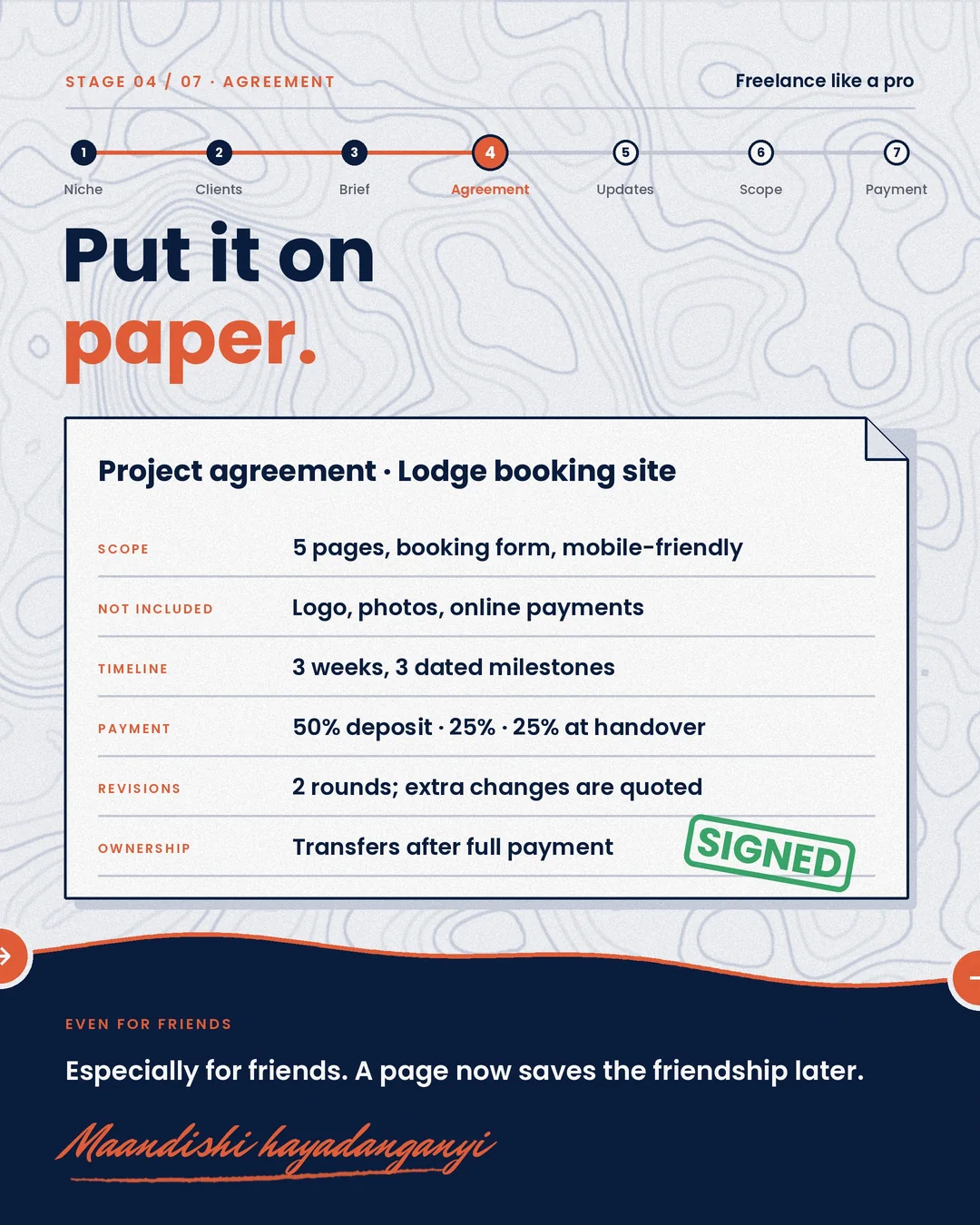
Stage 04: Agreement, put it on paper
One page is enough. It should say:
- Scope: exactly what you’ll build.
- Not included: what you won’t (logo, photos, online payments…).
- Timeline: the dates of each milestone.
- Payment: for example 50% deposit, 25% at a milestone, 25% at handover.
- Revisions: how many rounds, and that extra changes are quoted.
- Ownership: the work becomes theirs after full payment.
Both of you sign or confirm it in writing. Even for friends. Especially for friends: a page now saves the friendship later. Maandishi hayadanganyi.
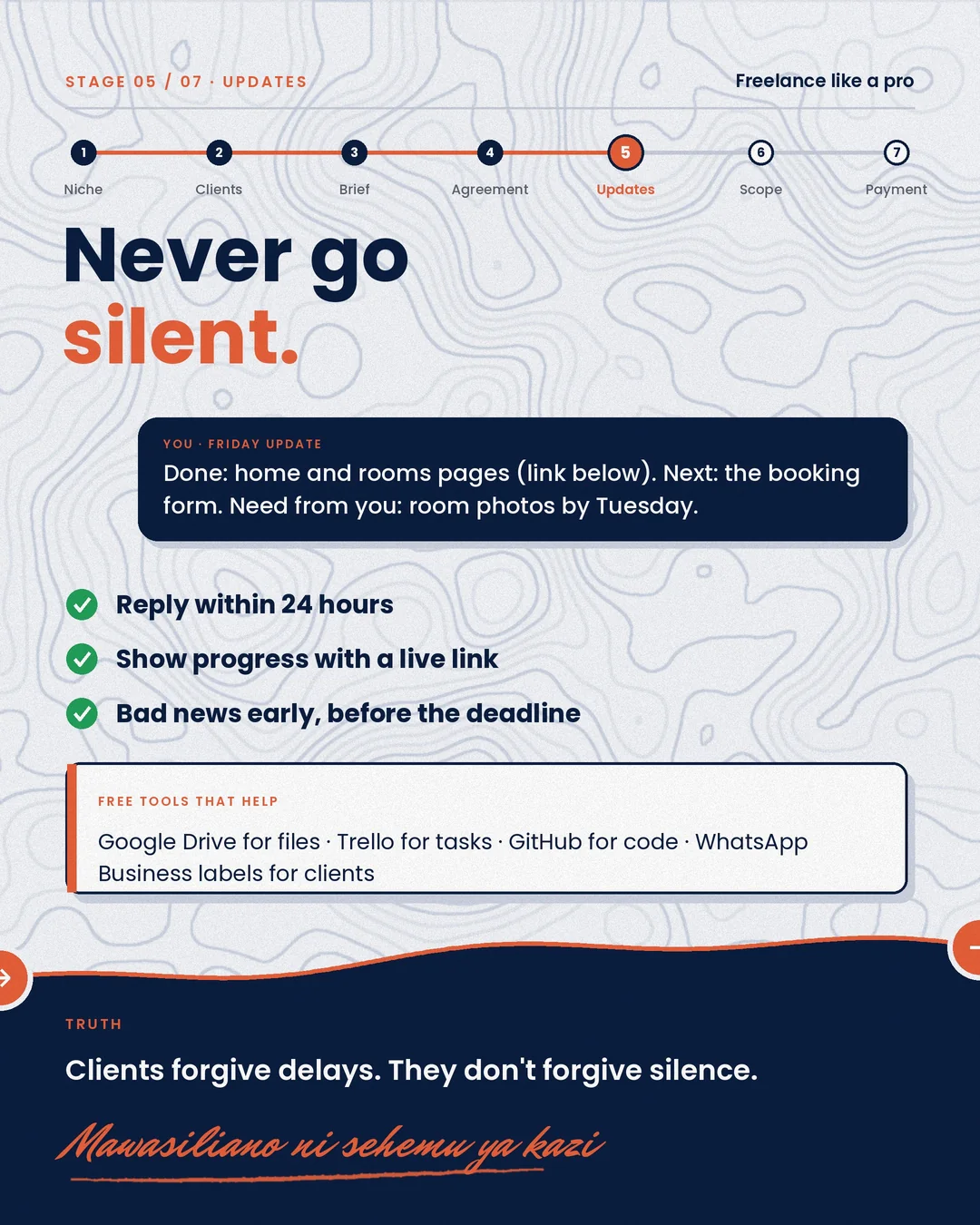
Stage 05: Updates, never go silent
Send a short update every week, for example on Friday:
Done: home and rooms pages (link below). Next: the booking form. Need from you: room photos by Tuesday.
Reply within 24 hours, show progress with a live link, and if you’ll be late, say so before the deadline. Clients forgive delays. They don’t forgive silence. Free tools help: Google Drive for files, Trello for tasks, GitHub for code, WhatsApp Business labels for clients.
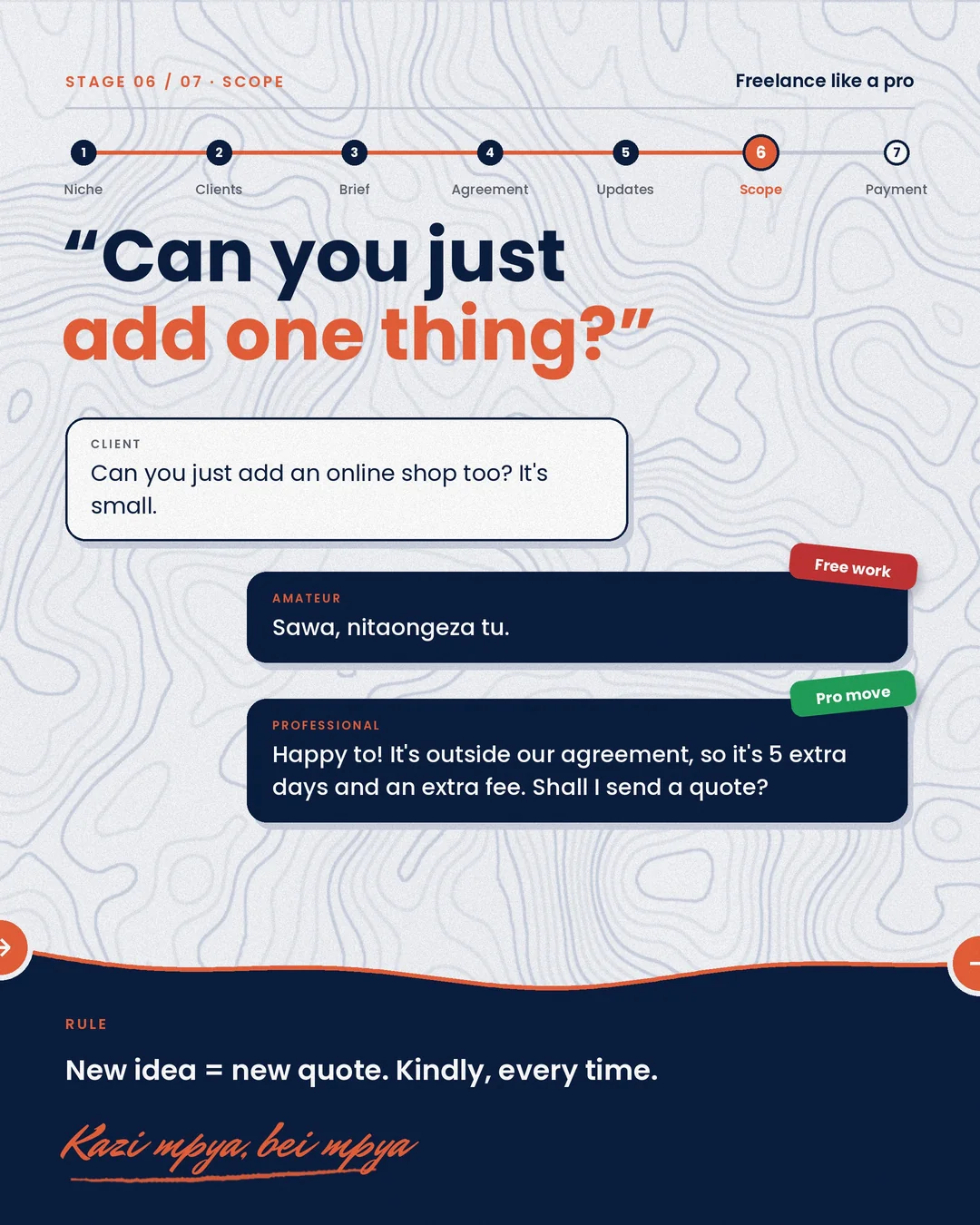
Stage 06: Scope, “can you just add one thing?”
It always comes. The amateur says “sawa, nitaongeza tu” and works for free for weeks. The professional says:
Happy to! It’s outside our agreement, so it’s 5 extra days and an extra fee. Shall I send a quote?
New idea = new quote, kindly, every time. Your agreement already says extra changes are quoted, so this isn’t rude; it’s the deal. Kazi mpya, bei mpya.
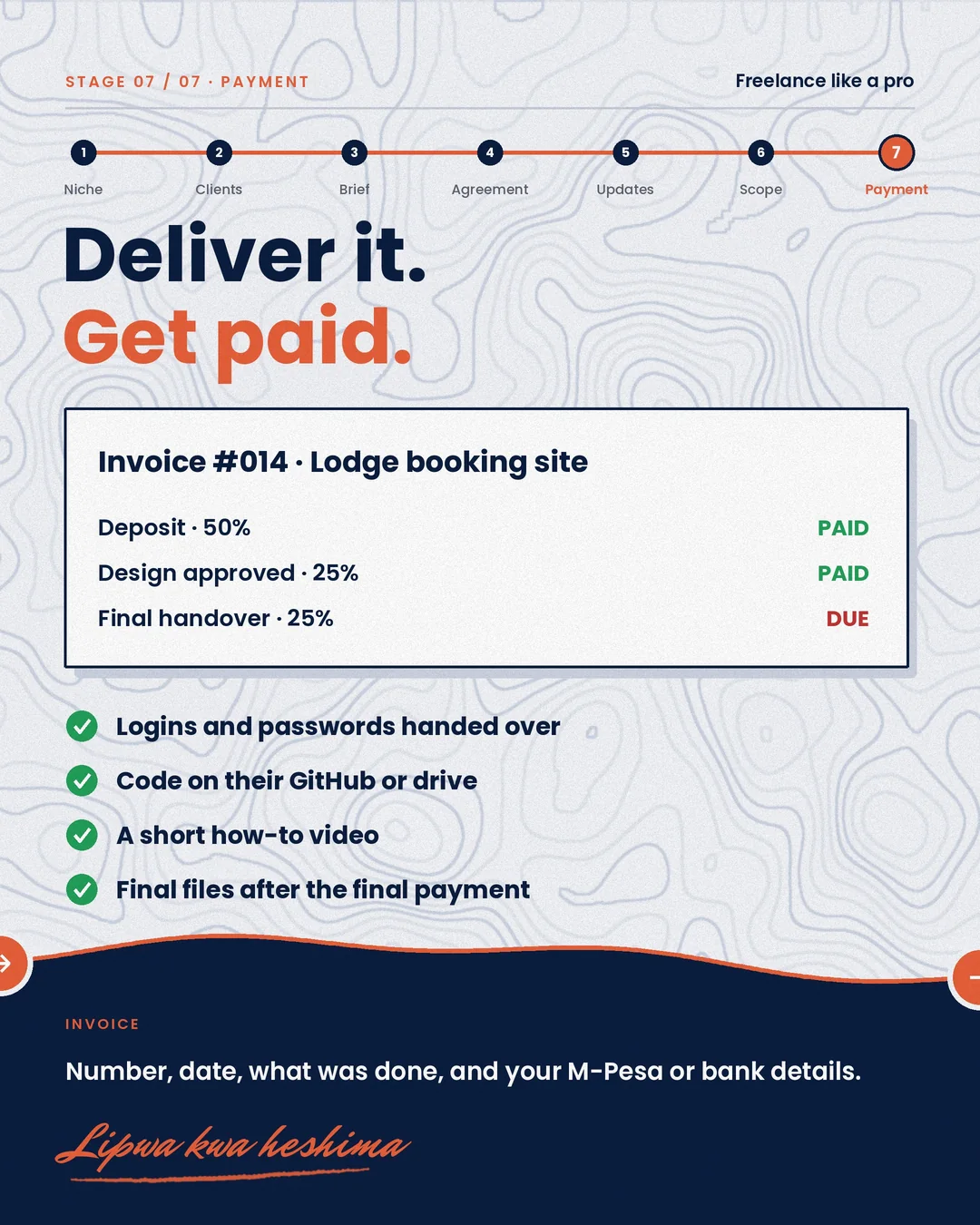
Stage 07: Deliver and get paid
Send an invoice for each milestone with a number, the date, what was done and your M-Pesa or bank details. At handover:
- Hand over logins and passwords.
- Put the code on their GitHub or drive.
- Record a short how-to video.
- Release the final files after the final payment.
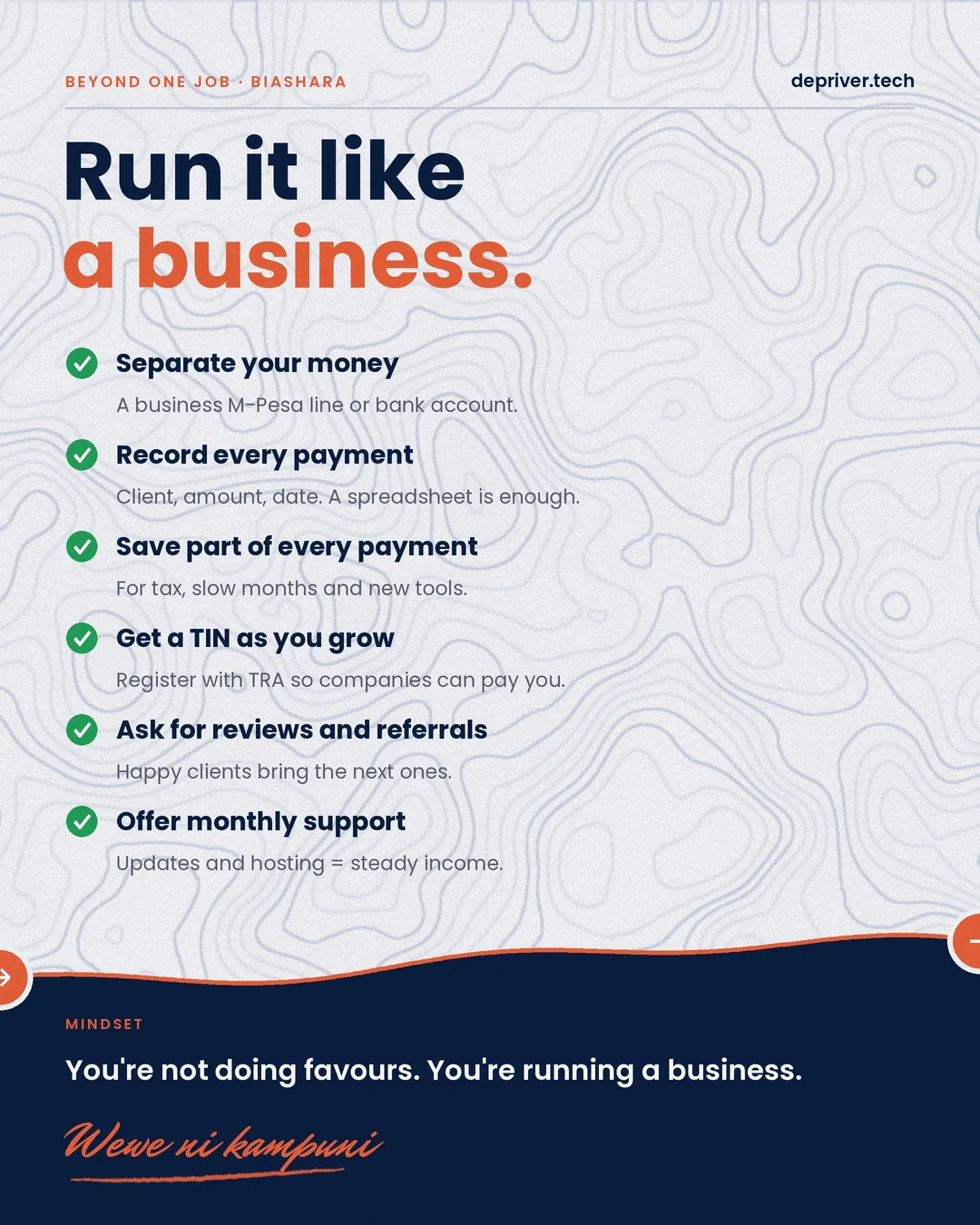
Run it like a business
- Separate your money: a business M-Pesa line or bank account.
- Record every payment: client, amount, date. A spreadsheet is enough.
- Save part of every payment for tax, slow months and new tools.
- Get a TIN as you grow: register with TRA so companies can pay you properly.
- Ask for reviews and referrals: happy clients bring the next ones.
- Offer monthly support: updates and hosting become steady income.
You’re not doing favours. You’re running a business. Wewe ni kampuni.
Red flags: walk away
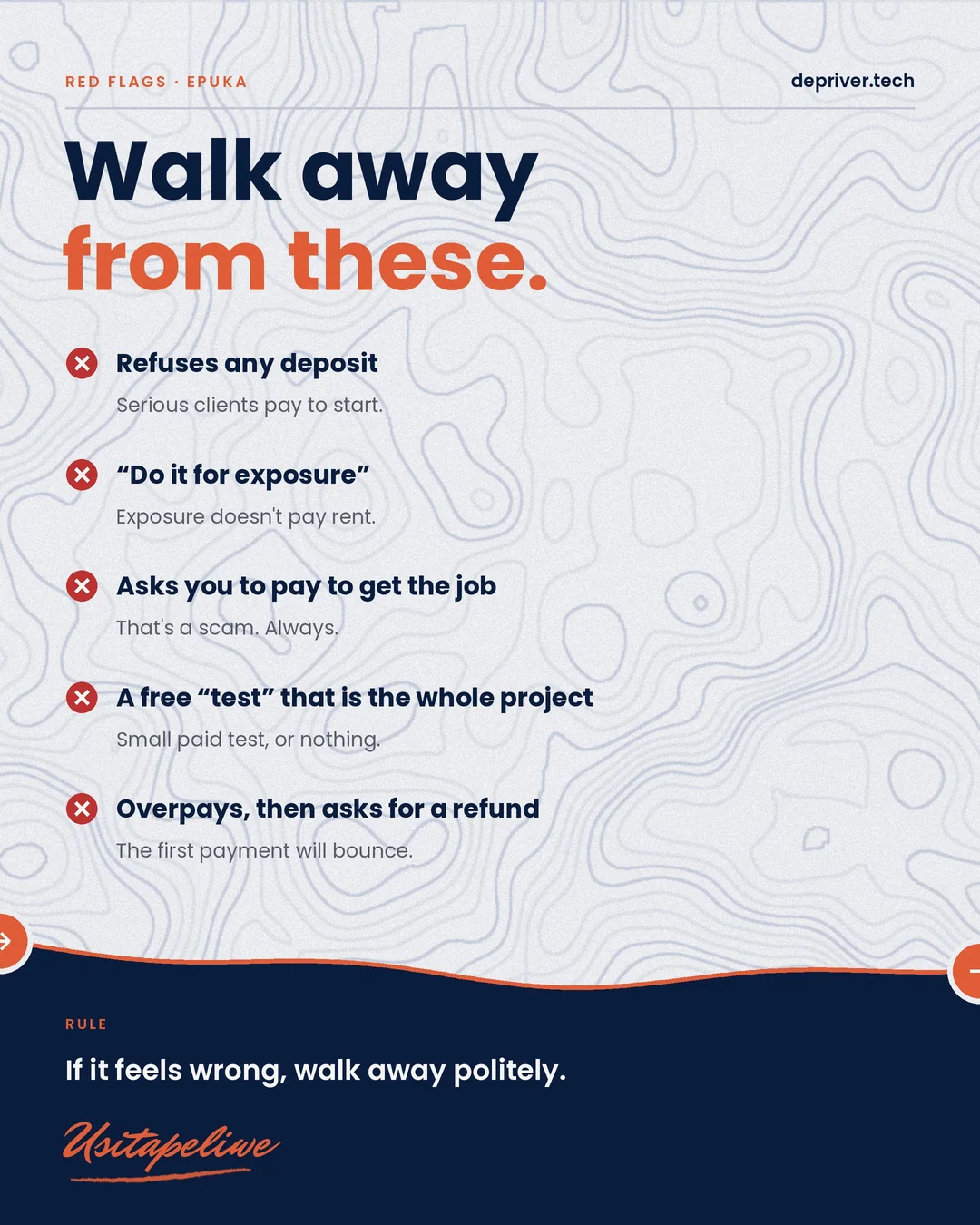
- A client who refuses any deposit. Serious clients pay to start.
- “Do it for exposure.” Exposure doesn’t pay rent.
- Anyone asking you to pay to get the job. That’s a scam, always.
- A free “test” that is actually the whole project. Offer a small paid test, or nothing.
- A client who overpays and asks for a refund of the difference. The first payment will bounce.
If it feels wrong, walk away politely. Usitapeliwe.
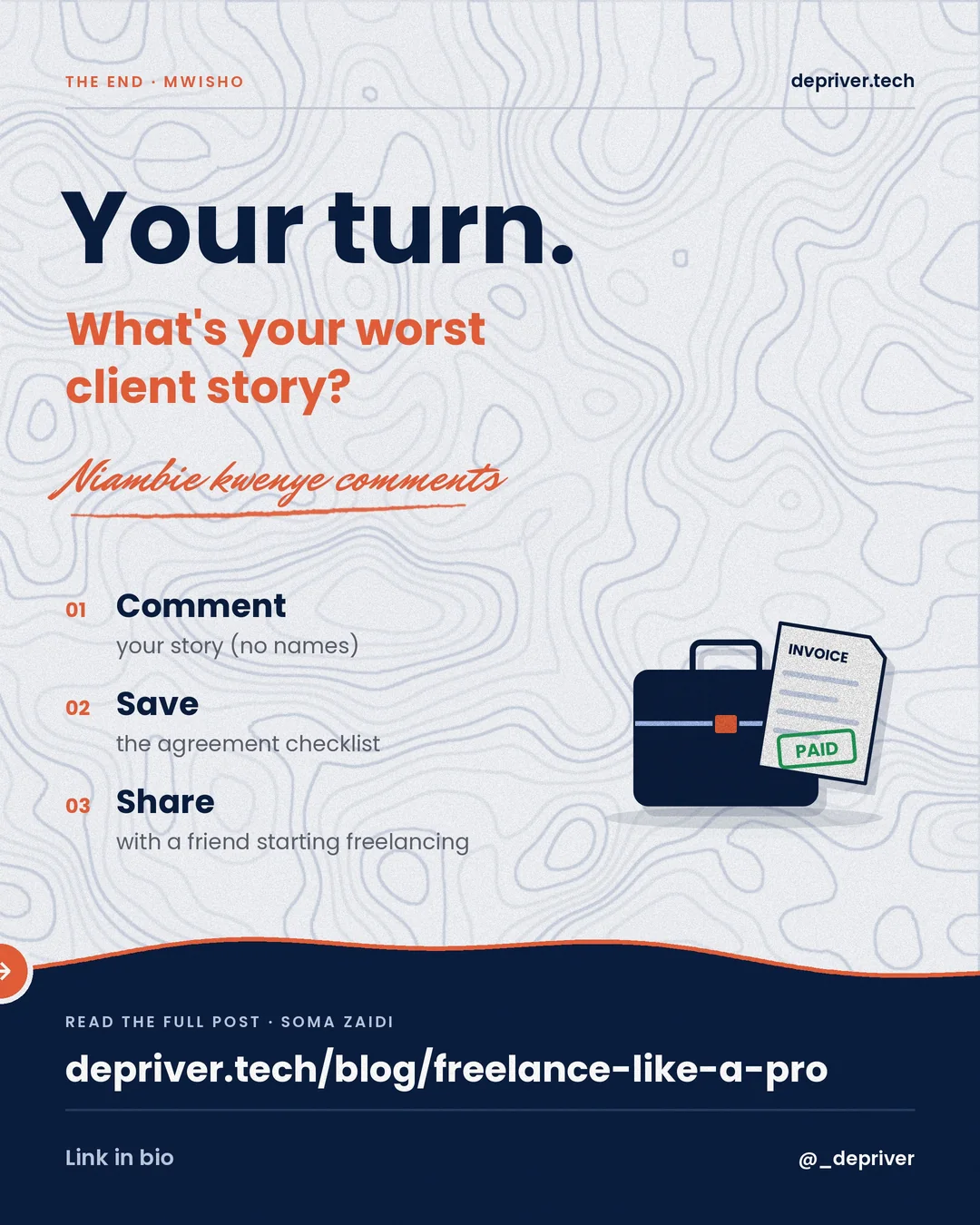
What’s your worst client story, or what’s stopping you from starting? Tell me in the comments (no names). I read every one.