Six levels from setup to professional, with real code at each step, every area where Python is used, specialisation paths, projects per level, free resources, and a free 43-page book to download.
One of my students asked me for a guide to Python “from the very beginning to working like a professional”. So I made two things: this roadmap, and a free book that goes much deeper. Ramani kamili, hatua kwa hatua.
📘 Free book: Python Daily
Download Python Daily (PDF, 43 pages): every level in detail, with explanations, real code, practice exercises and a project per level, all 20 areas where Python is used, a 12-month plan, free resources and a glossary. Free to read, print and share. Please don’t sell it.
Why Python?
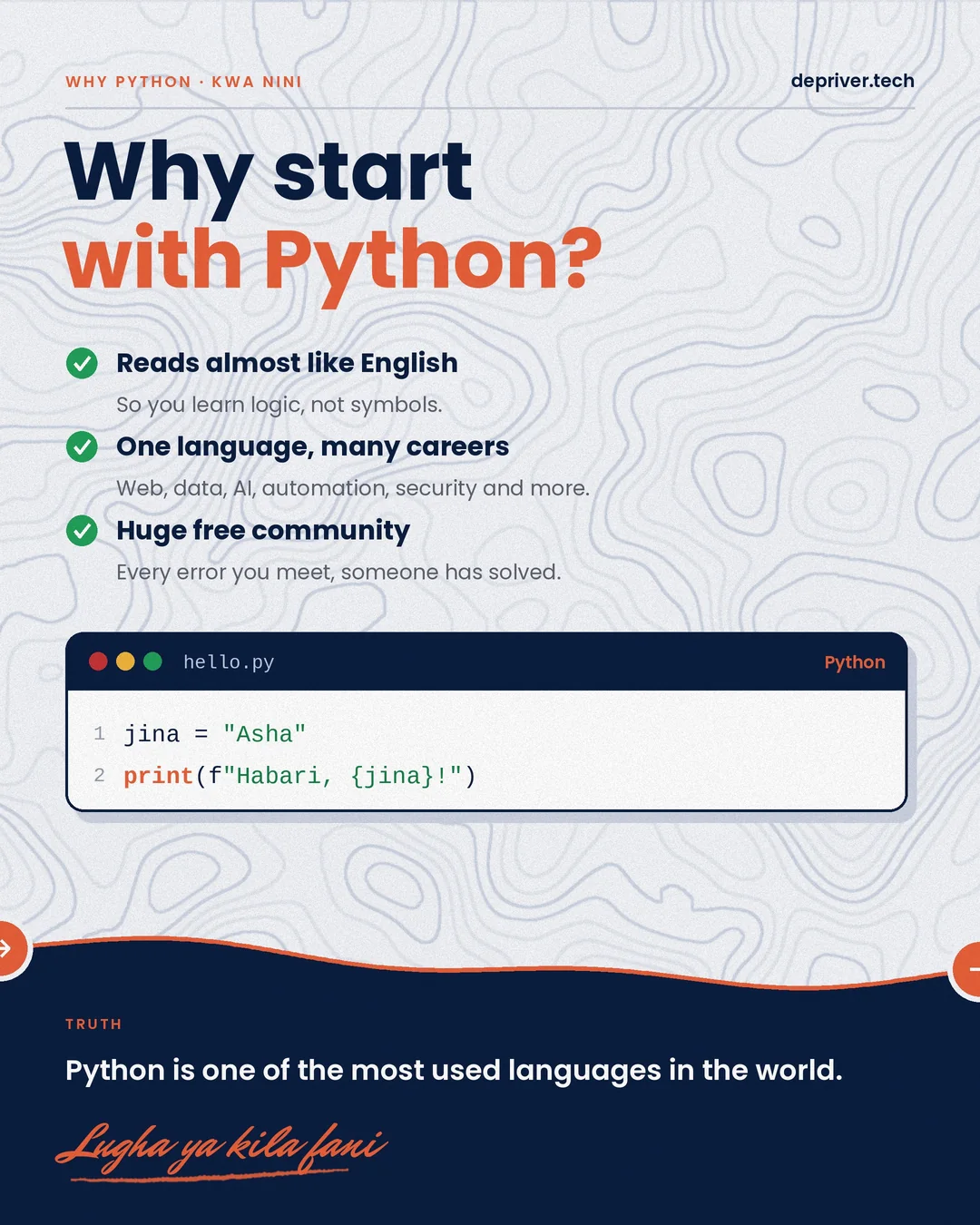
Python reads almost like English, so you spend your energy on logic, not symbols. One language opens many careers, and its community is huge: almost every error you meet, someone has already solved online.
The six levels
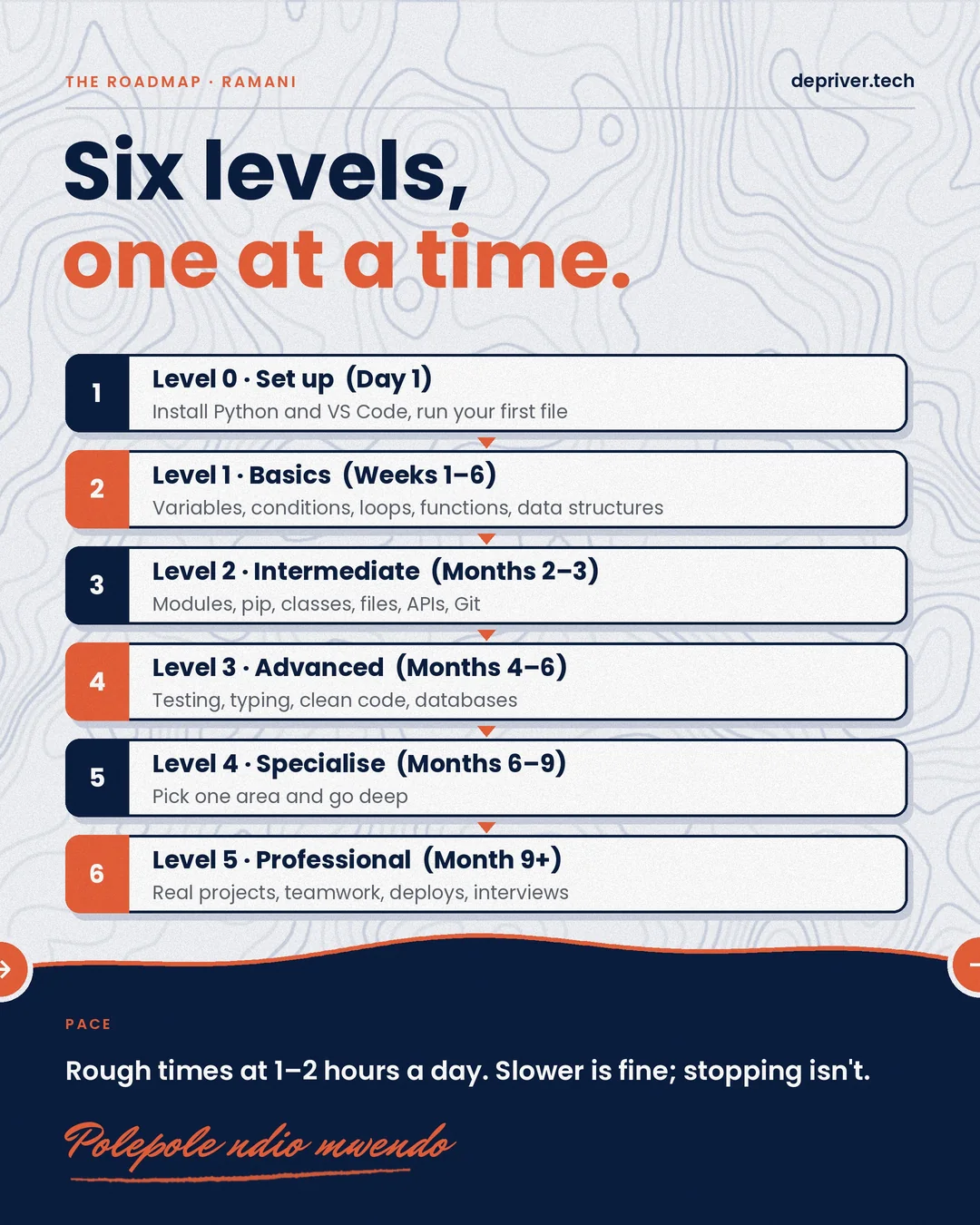
| Level |
Name |
Rough time |
Focus |
| 0 |
Set up |
Day 1 |
Install Python and VS Code, run your first file |
| 1 |
Basics |
Weeks 1–6 |
Variables, conditions, loops, functions, data structures |
| 2 |
Intermediate |
Months 2–3 |
Modules, pip, classes, files, APIs, Git |
| 3 |
Advanced |
Months 4–6 |
Testing, typing, clean code, databases |
| 4 |
Specialise |
Months 6–9 |
One area, in depth |
| 5 |
Professional |
Month 9+ |
Real projects, teamwork, deploys, interviews |
The times assume one to two hours a day. Slower is fine; stopping isn’t. Polepole ndio mwendo.
Level 0: Set up
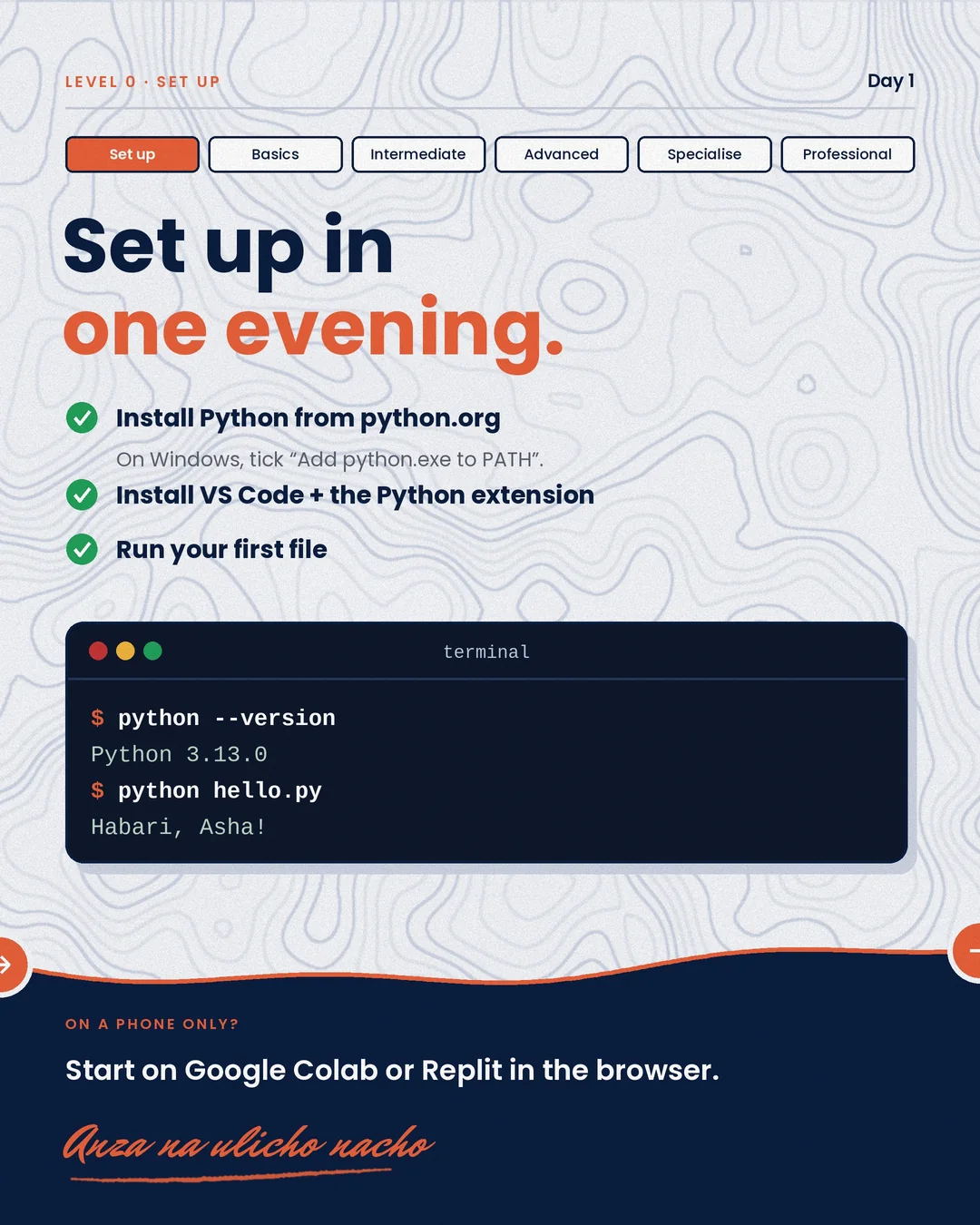
Install Python from python.org (on Windows, tick “Add python.exe to PATH”), then VS Code with the Python extension. Run your first file with python hello.py. Only have a phone? Start in the browser with Google Colab or Replit.
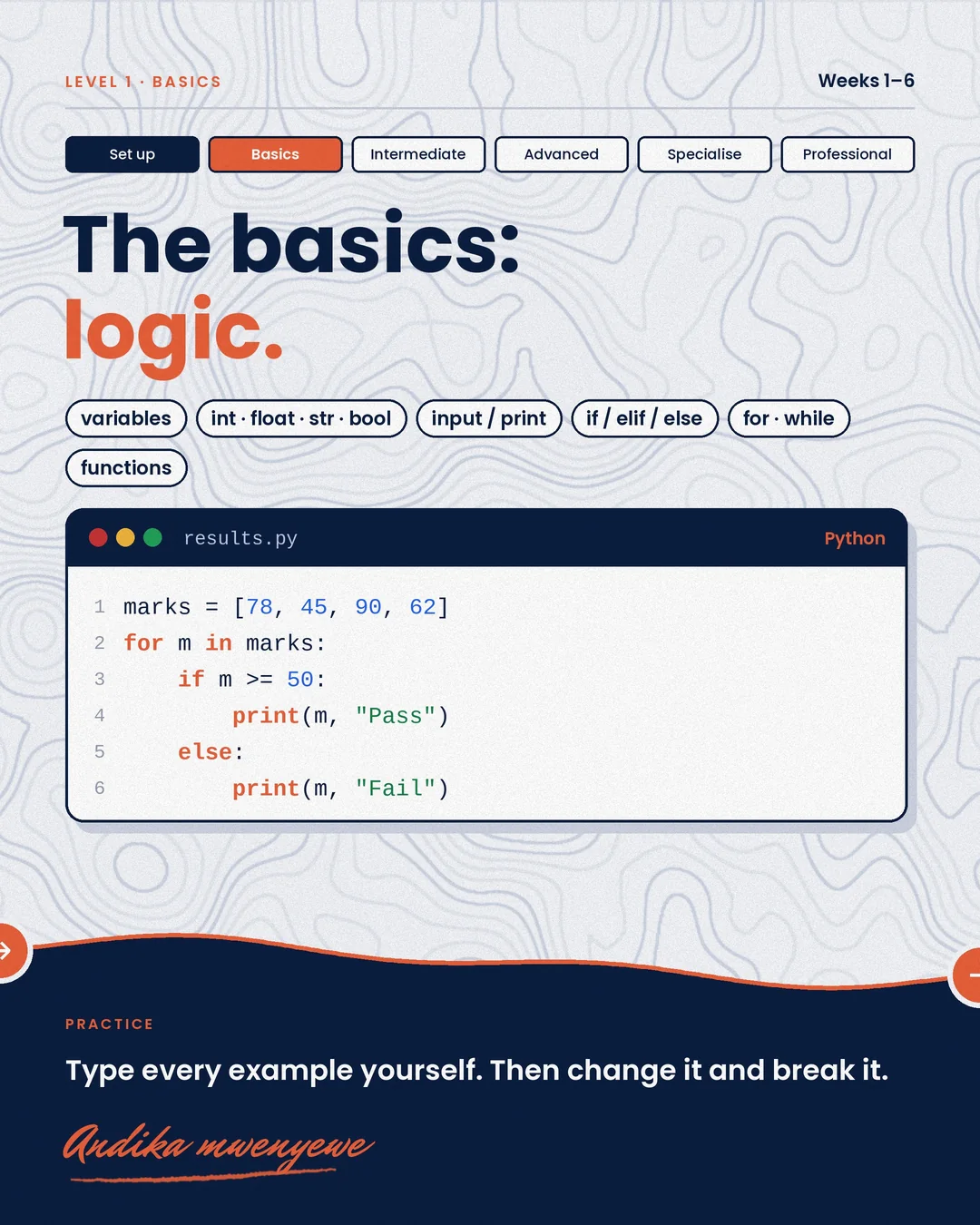
Level 1: The basics
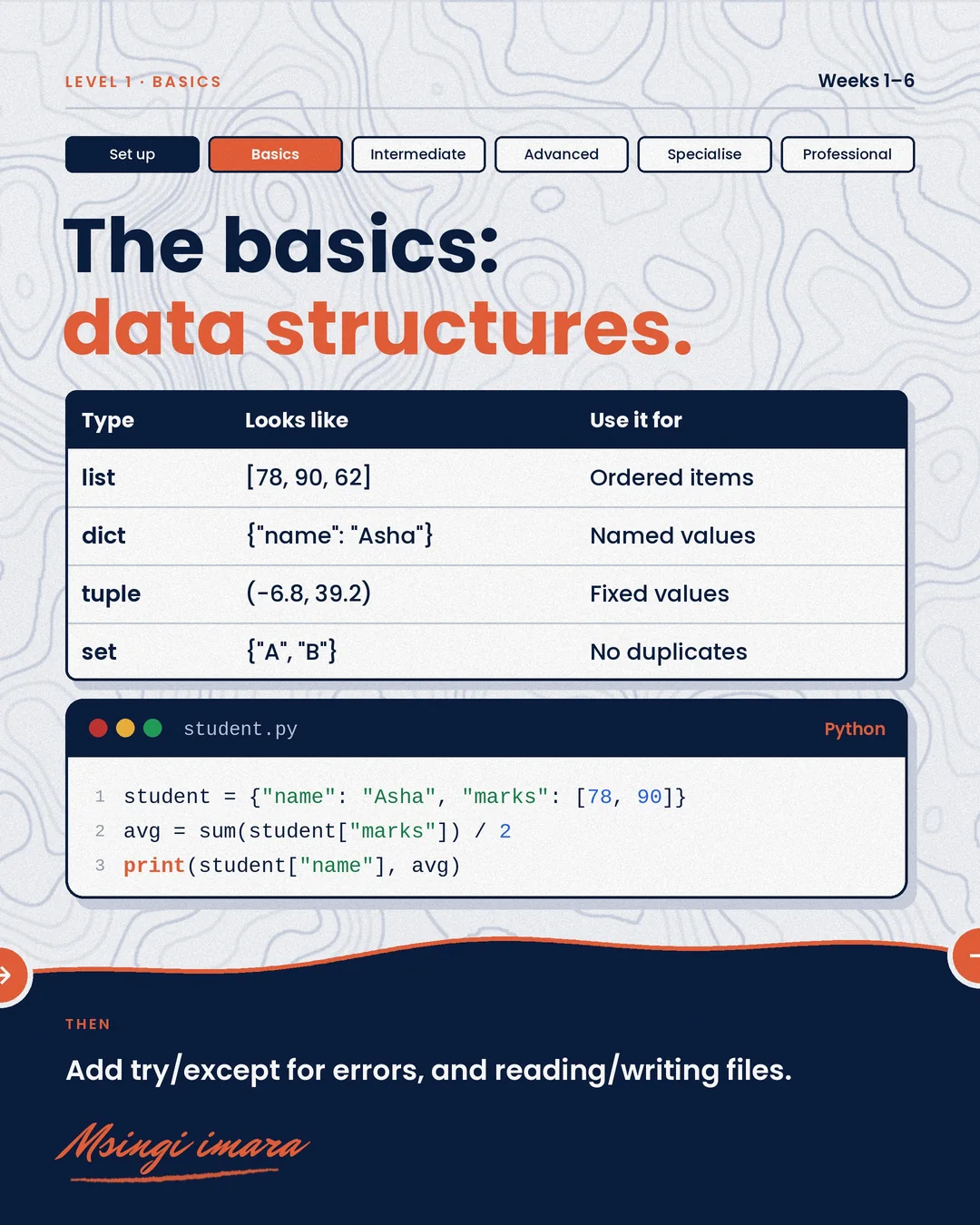
Variables and types, input() and print(), if / elif / else, for and while loops, functions, then lists, dictionaries, tuples and sets, errors with try / except, and reading and writing files.
marks = [78, 45, 90, 62]
for m in marks:
    if m >= 50:
        print(m, "Pass")
    else:
        print(m, "Fail")
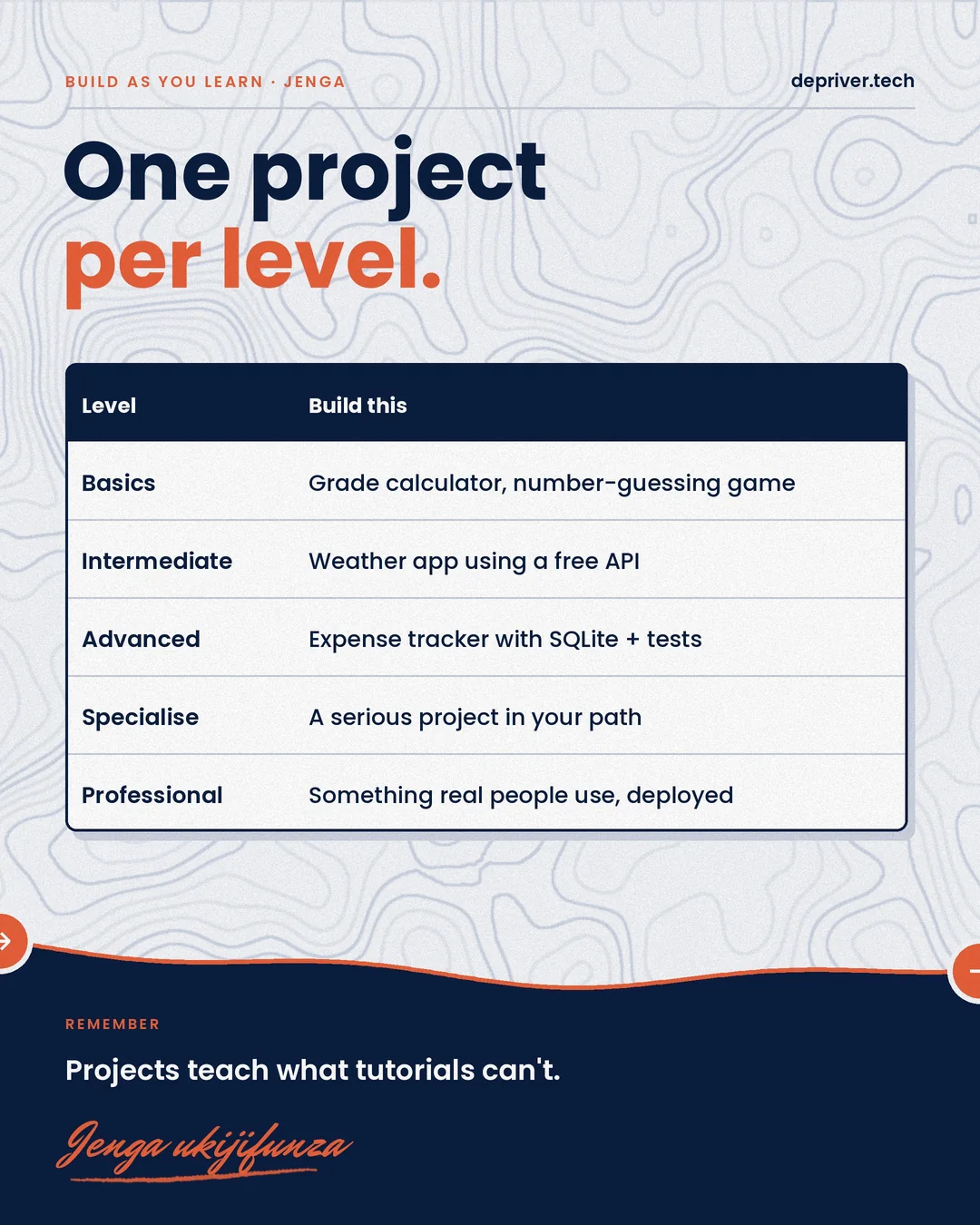
Build: a grade calculator.
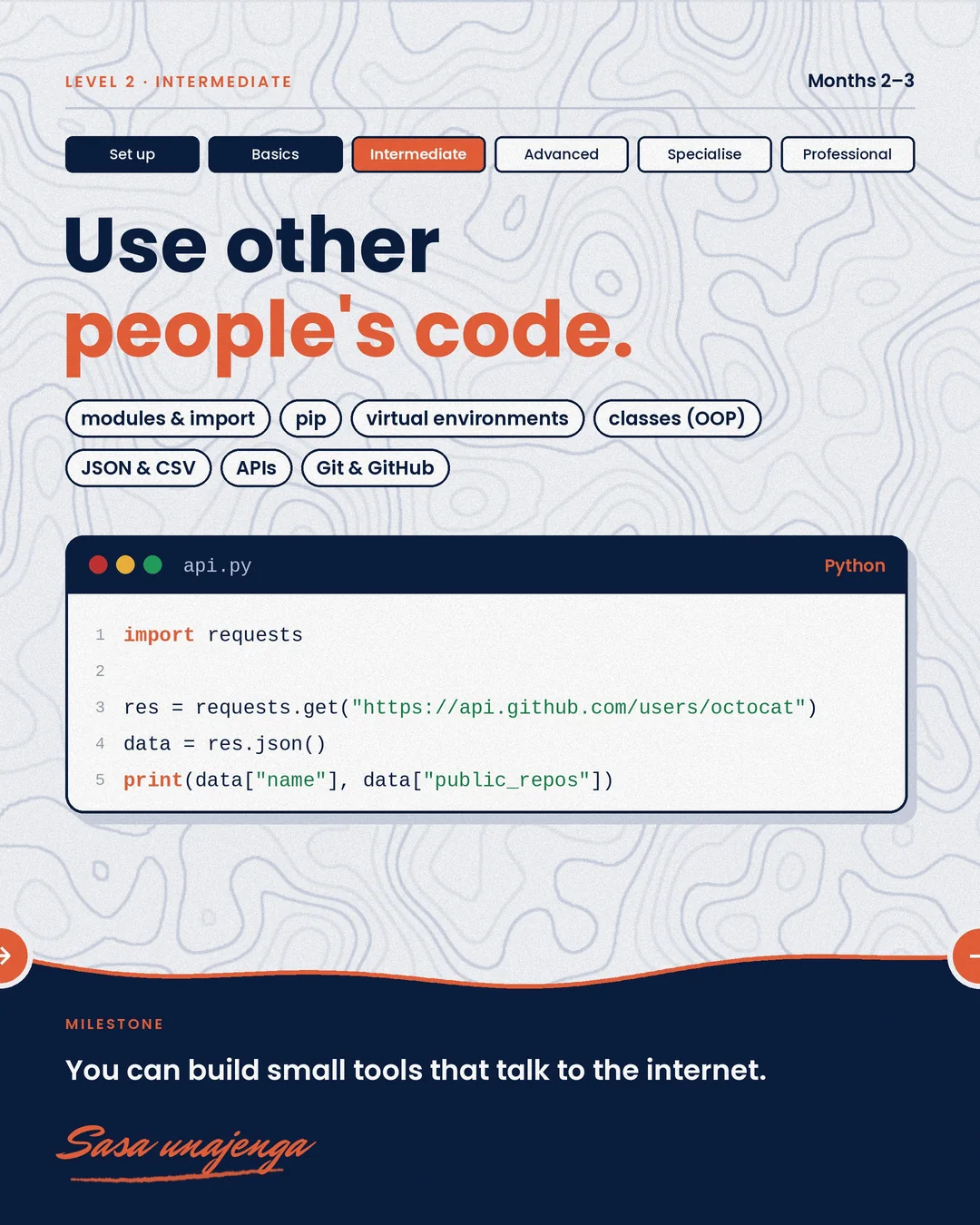
Modules and the standard library, pip and virtual environments, classes, comprehensions, JSON and CSV, calling APIs with requests, and Git and GitHub from now on, every day.
Build: a weather app using a free API.
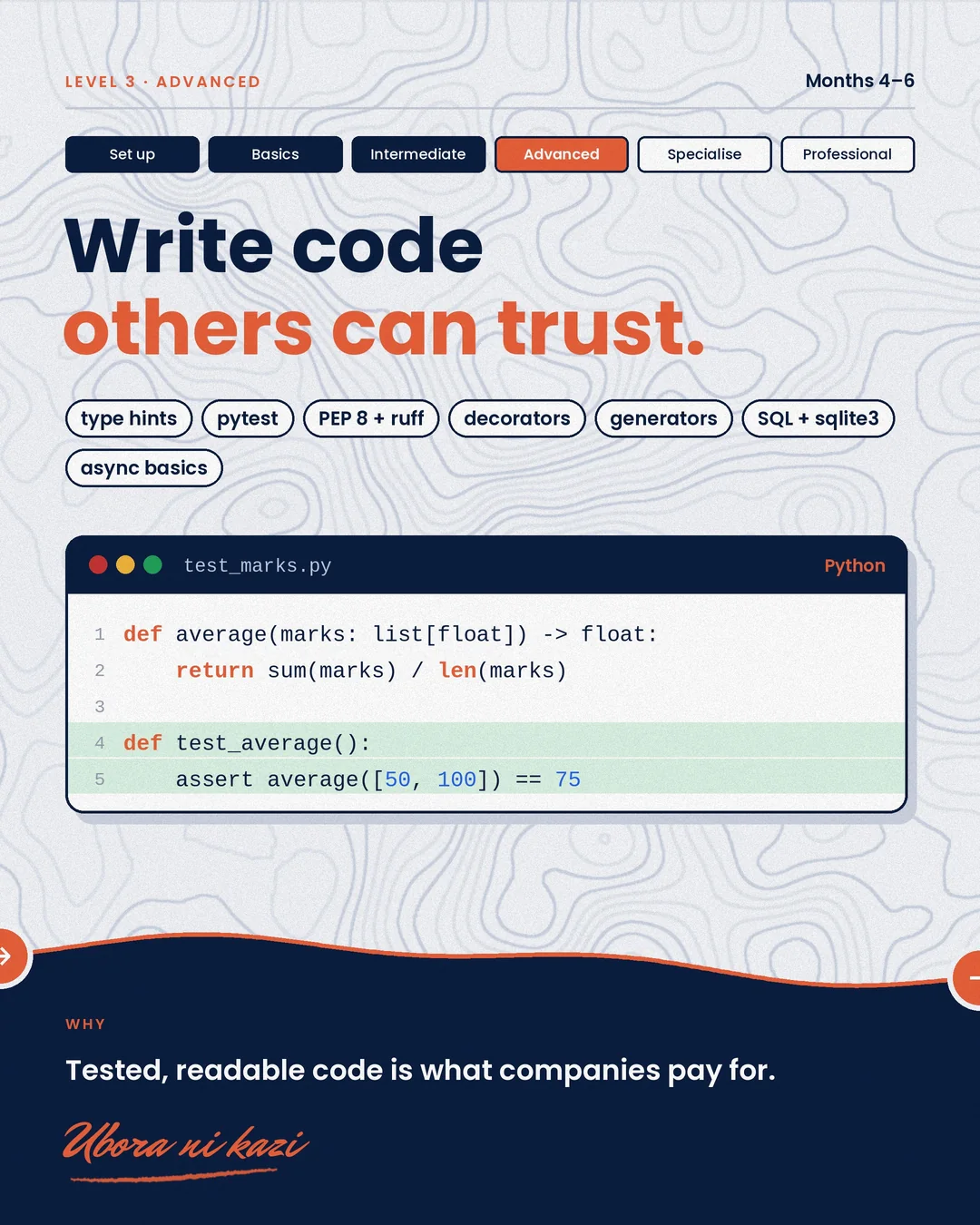
Level 3: Advanced
Type hints, testing with pytest, clean code (PEP 8, ruff), decorators and generators, SQL with sqlite3, and a first look at async.
def average(marks: list[float]) -> float:
    return sum(marks) / len(marks)

def test_average():
    assert average([50, 100]) == 75
Build: an expense tracker with SQLite and tests.
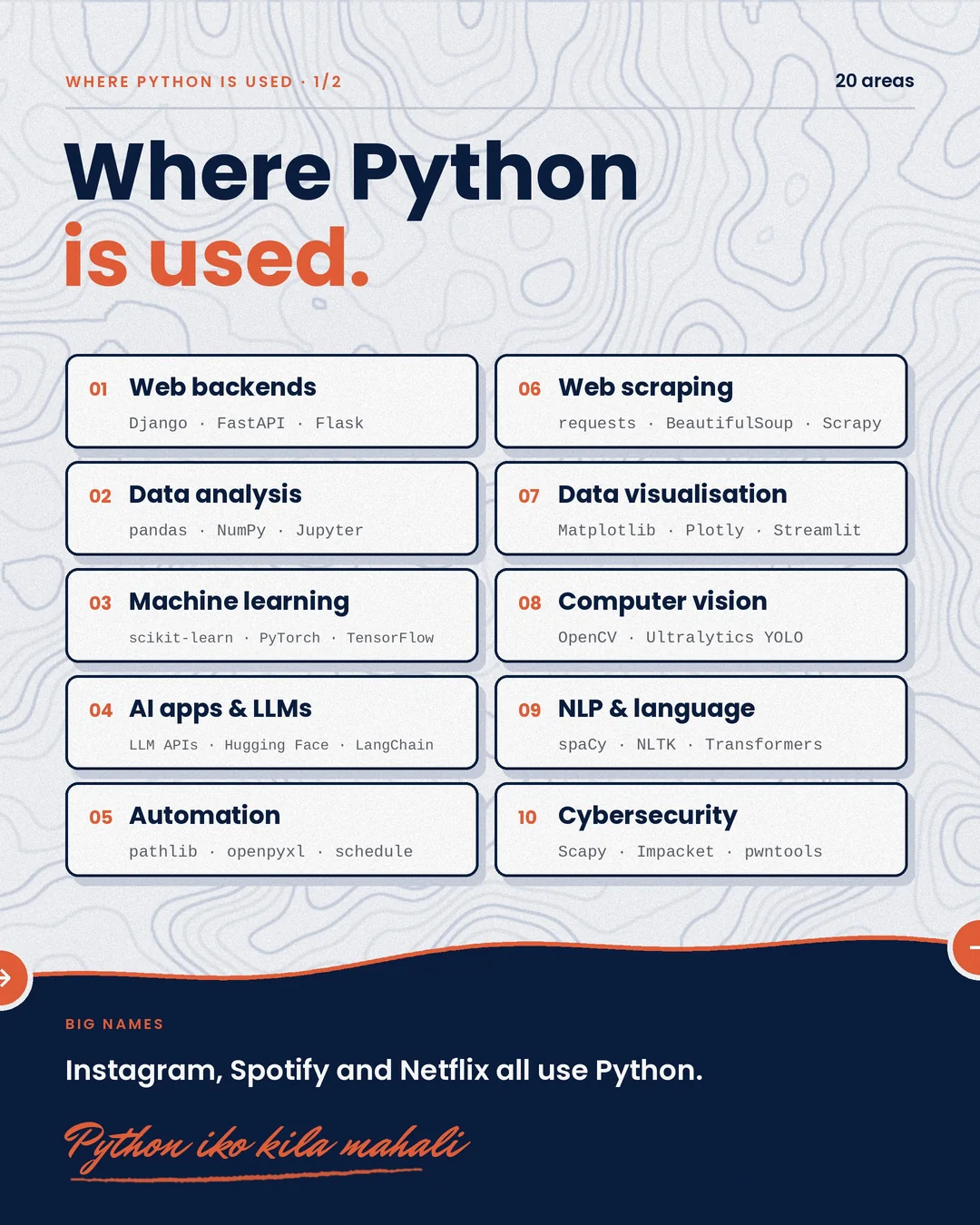
Where Python is used
- Web backends: Django, FastAPI, Flask
- Data analysis: pandas, NumPy, Jupyter
- Machine learning: scikit-learn, PyTorch, TensorFlow
- AI apps and LLMs: LLM APIs, Hugging Face, LangChain
- Automation: pathlib, openpyxl, schedule
- Web scraping: requests, BeautifulSoup, Scrapy
- Data visualisation: Matplotlib, Plotly, Streamlit
- Computer vision: OpenCV, Ultralytics YOLO
- NLP and language: spaCy, NLTK, Transformers
- Cybersecurity: Scapy, Impacket, pwntools
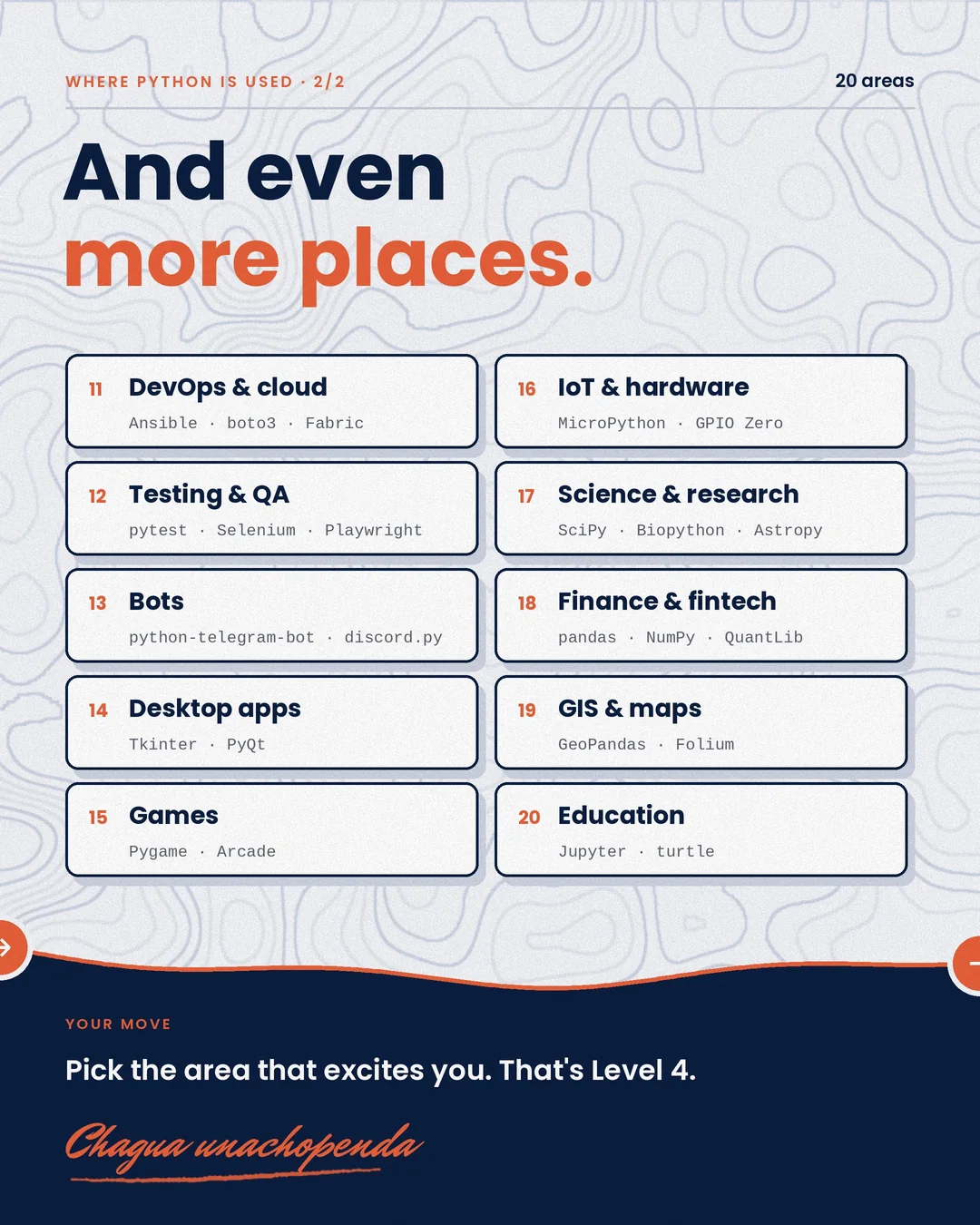
- DevOps and cloud: Ansible, boto3, Fabric
- Testing and QA: pytest, Selenium, Playwright
- Bots: python-telegram-bot, discord.py
- Desktop apps: Tkinter, PyQt
- Games: Pygame, Arcade
- IoT and hardware: MicroPython, GPIO Zero
- Science and research: SciPy, Biopython, Astropy
- Finance and fintech: pandas, NumPy, QuantLib
- GIS and maps: GeoPandas, Folium
- Education: Jupyter, turtle
Python Daily gives each area a short explanation and a first project.
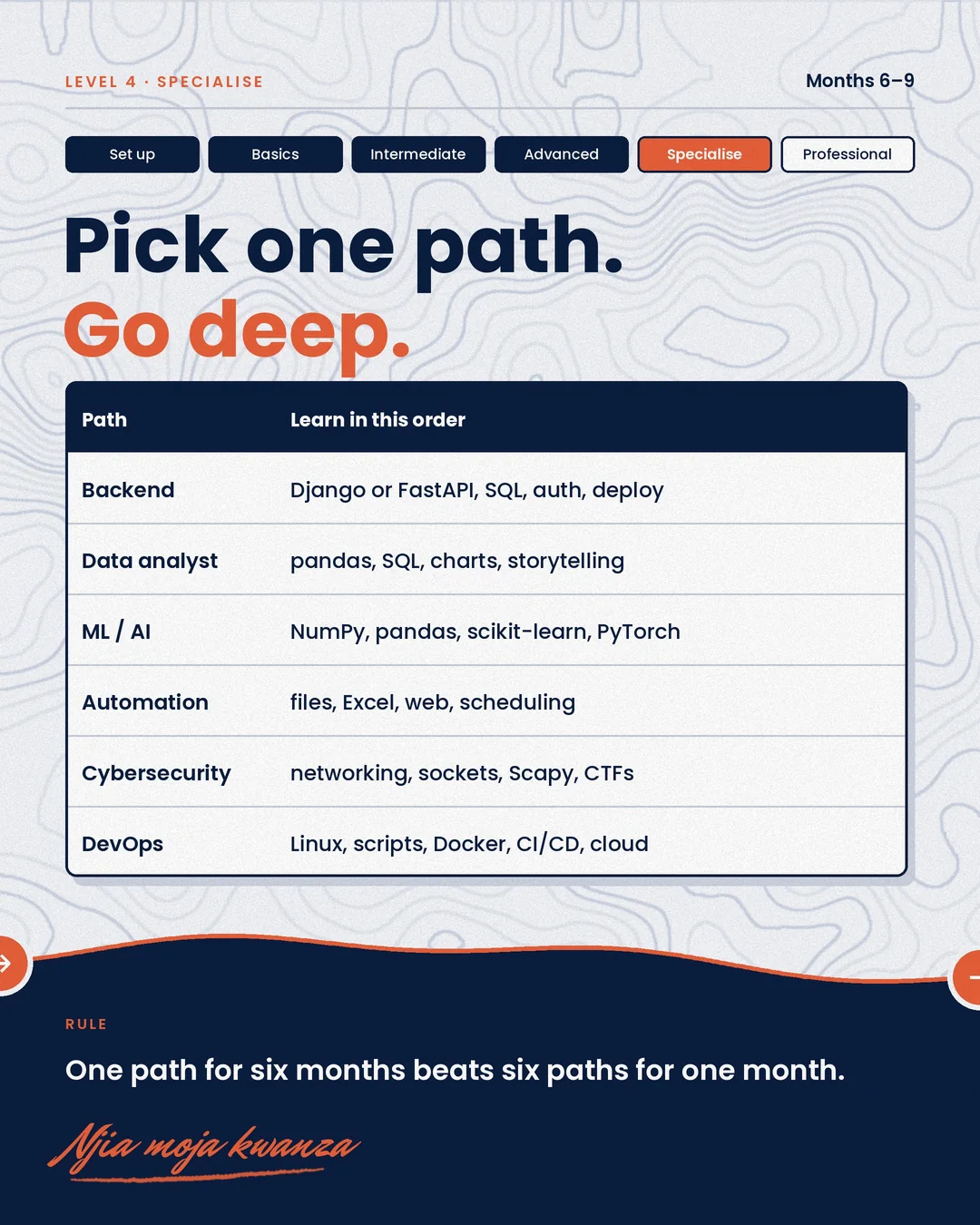
Level 4: Specialise
Pick one path and go deep. One path for six months beats six paths for one month.
- Backend: Django or FastAPI, SQL, authentication, deploys.
- Data analyst: pandas, SQL, charts, storytelling with data.
- ML / AI: NumPy, pandas, scikit-learn, PyTorch.
- Automation: files, Excel, the web, scheduling.
- Cybersecurity: networking, sockets, Scapy, CTFs.
- DevOps: Linux, scripting, Docker, CI/CD, the cloud.
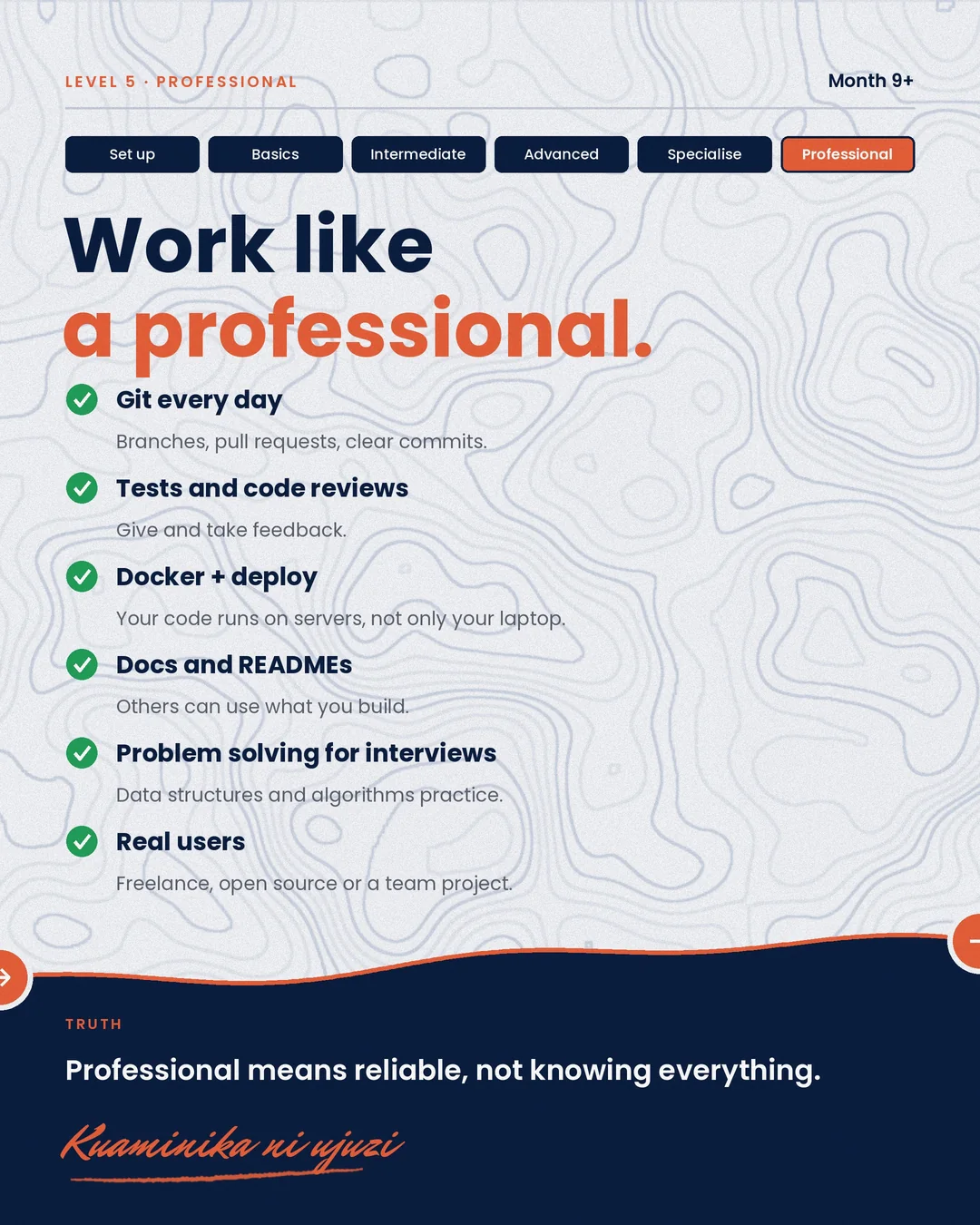
Level 5: Professional
Git every day, tests and code reviews, Docker and deploys, documentation, problem-solving practice for interviews, and real users through freelancing, open source or a team project. Professional means reliable, not knowing everything.
Free resources
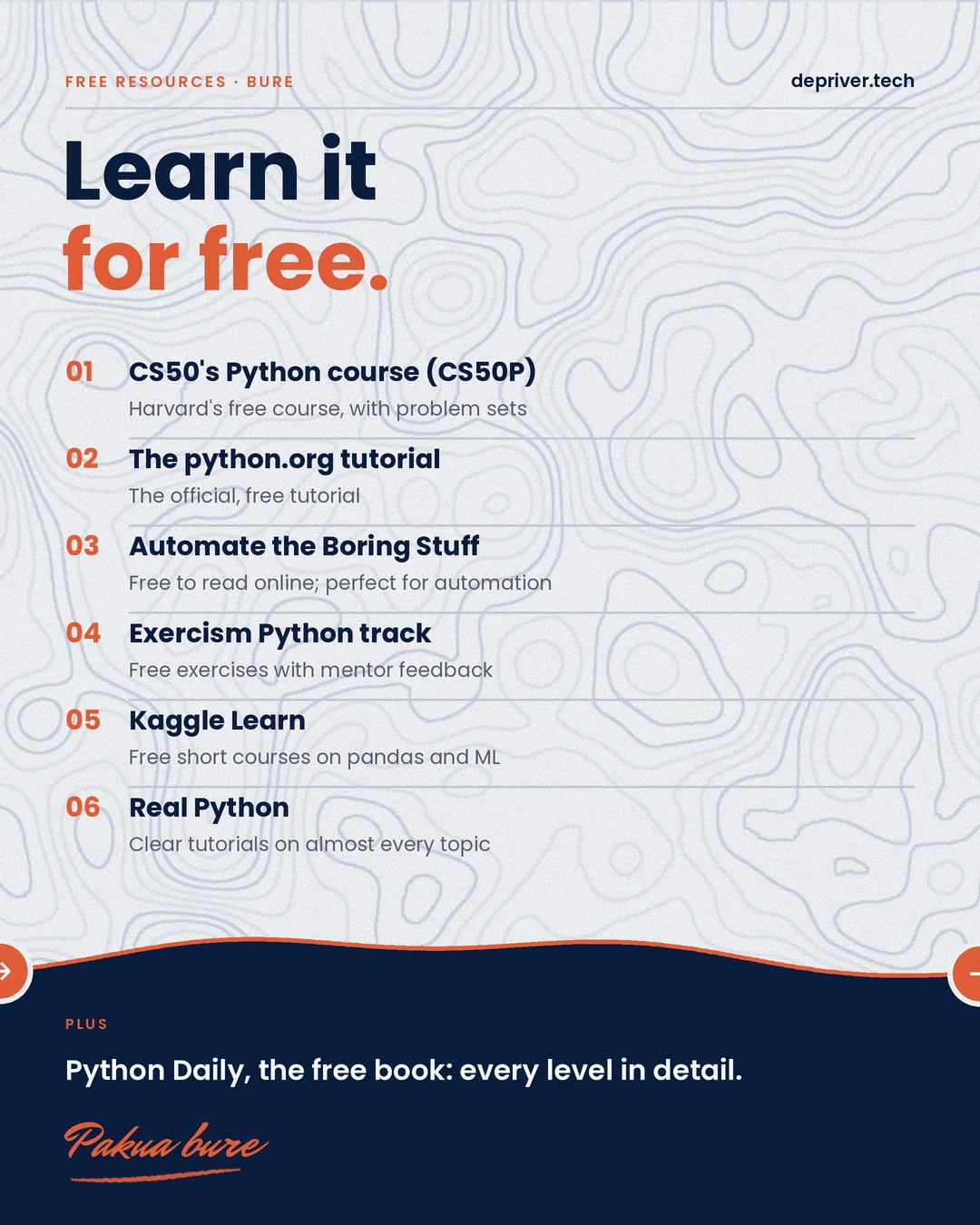
CS50’s Python course (CS50P), the official python.org tutorial, Automate the Boring Stuff with Python (free online), Exercism’s Python track, Kaggle Learn and Real Python.
Habits that get you there
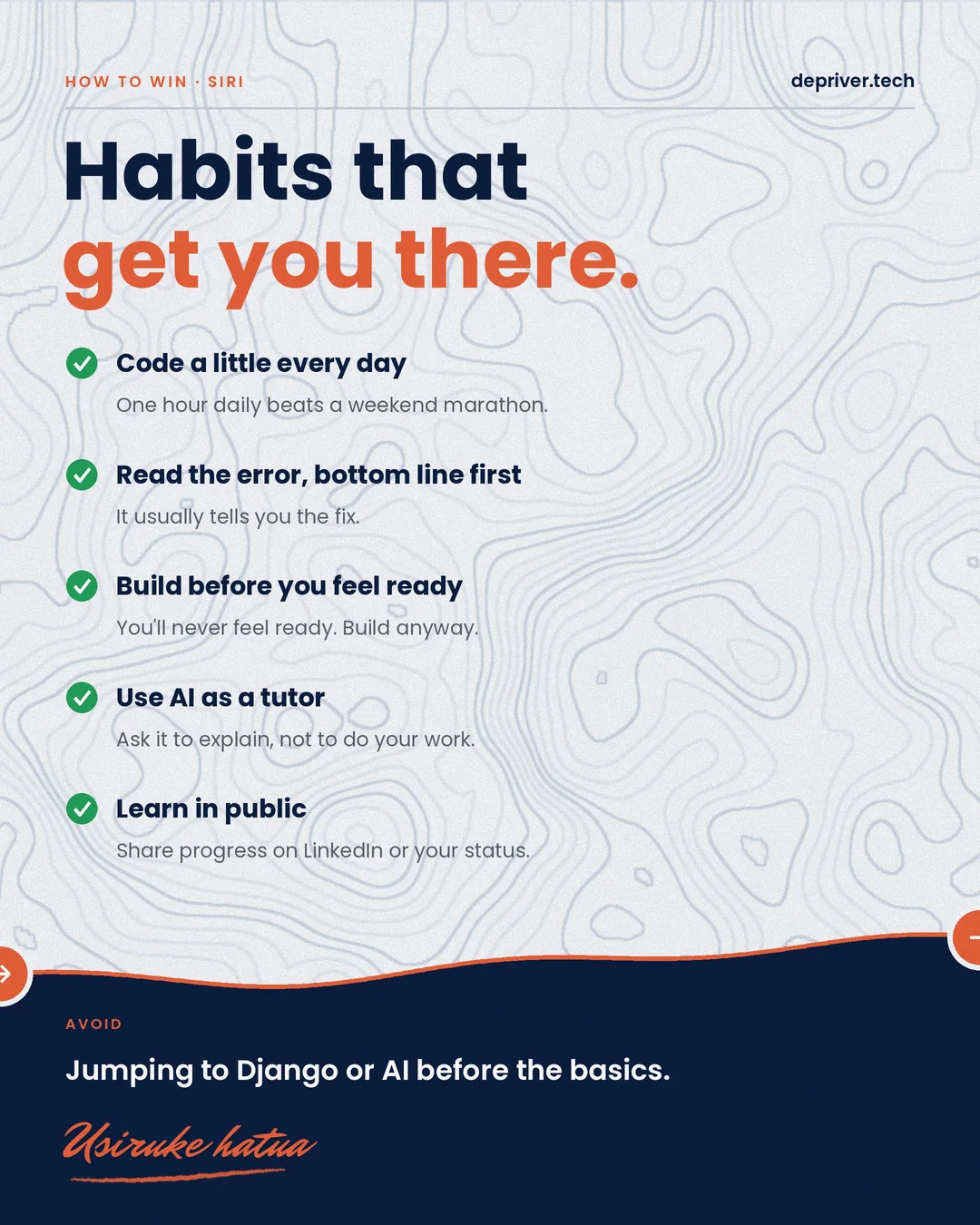
Code a little every day. Read the error message, bottom line first. Build before you feel ready. Use AI as a tutor, not a copy machine. Learn in public. And don’t jump to Django or AI before the basics. Usiruke hatua.
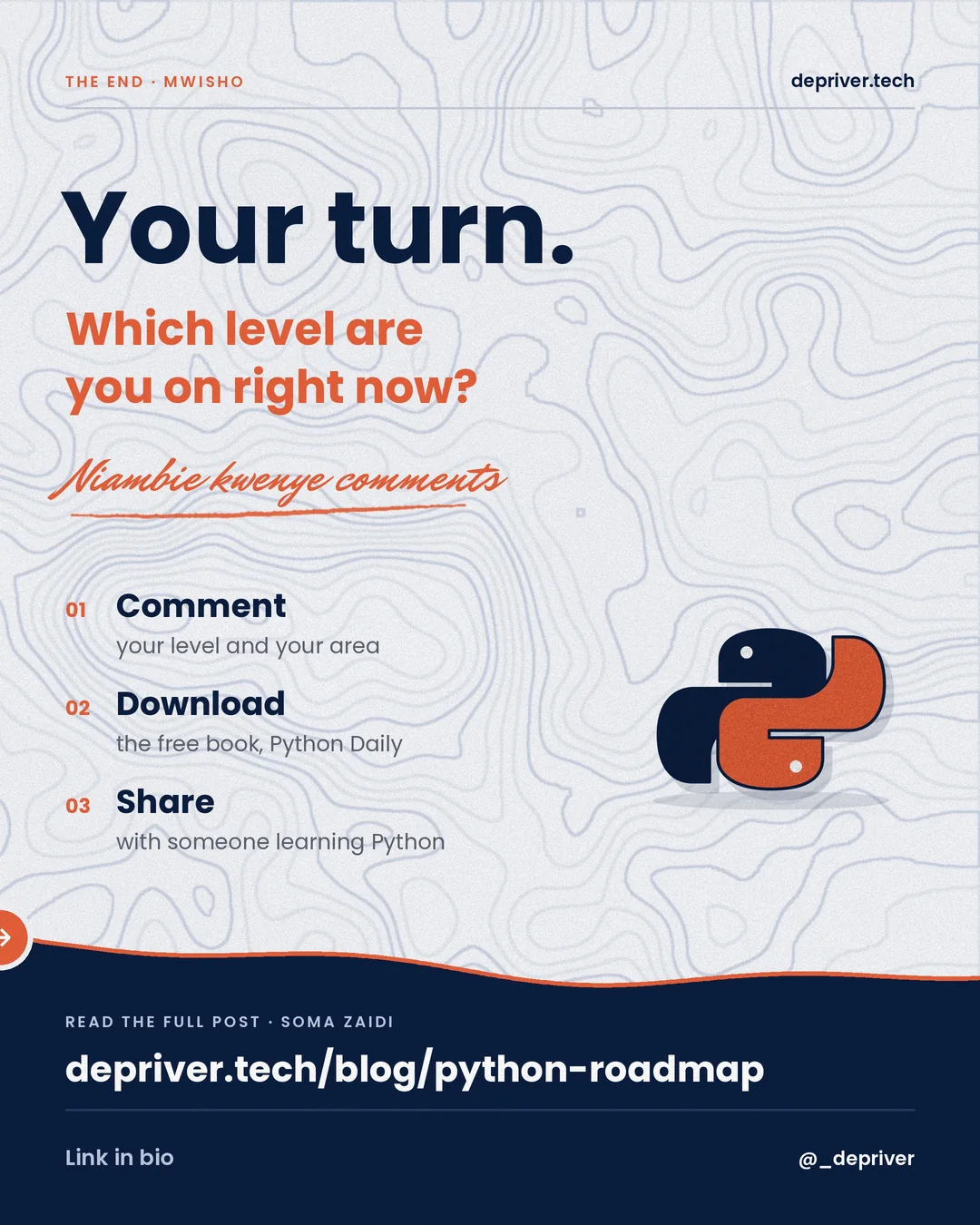
Which level are you on right now, and which area excites you most? Tell me in the comments. And share Python Daily with someone who’s starting.